Halfway When?

FullSizeRender 4.jpg

I find it intriguing that various cultural calendars choose to mark not just the obvious things – full moons and new moons, equinox and solstice – but also the positions halfway between. In the Tibetan ritual calendar, the half-moon days are equally as important as full moon or new moon and are marked as Guru Rinpoche Day and Dakini Day, with appropriate ceremonies.

In traditional Ireland, the primary named celebrations of the annual round – Samain, Imbolg, Beltaine, and Lughnasa – fell halfway between the solstice and equinox days.

February 2nd is recognized in our country as Groundhog Day, but it has deep connections to Irish Imbolg, “a pastoral festival celebrating the coming into milk of the ewes”. There may also have been some weather divination associated with Imbolg, a possible origin of our Groundhog Day.

I muse over all of this as a reminder that time – as well as the way in which we measure it – is all relative. The protagonist of my next novel – Shadow of the Hare, which will be published later this year – had similar thoughts after she moved out of the city and into a remote rural community:

“As the weeks extended into months, I kind of stopped keeping track of time. It’s all relative anyway, gauging our distance from some event in the past or some planned, imagined future, organizing our activities within the diurnal/nocturnal cycle, across the flow of seasons. (…)

“When I first arrived, I still felt the need to know what time it was, positioning my little digital clock on my table like some deity in a shrine. As summer heated up, I noticed that people would begin to say ‘good afternoon’ well before my clock declared midday. Similarly, on an overcast day, they might continue to offer ‘good morning’ long past noon. I soon relegated my clock to a dresser drawer; I had no further need of its guidance.”

Happy Groundhog Day, everyone! Happy Imbolg! It will all come ‘round again.

This Is Not a White Country

We're All In This Together... 36 x 18, $650

We’re All In This Together… 36 x 18, $650

Let’s get one thing straight: America is not a white country and never has been. In the first instance, it was settled by immigrants from Asia. We call these people “Native Americans” and they had established several thriving civilizations throughout the Americas long before Europeans ever set foot here. In the year of Columbus’ momentous “discovery”, the largest city in the world was Tenochtitlan, the Aztec capital in central Mexico. There were also smaller cities across the North American Midwest, integrated with one another by extensive trade networks. Spanish explorers reported on these cities, most of which had disappeared by the time the English and French arrived, due to the spread of diseases brought in by the Spaniards.

When scores of disinherited younger sons of English lords came on the scene, seeking to establish their own lordships in the New World, they found the country very unlike the British Isles, so they began using slave labor to work their fields and herd their cattle. But the slaves were not just for labor. Have you ever asked yourself what a bunch of Englishmen knew about raising rice and cotton? The answer is clear: Absolutely nothing. The experts in raising rice and cotton – and also the experts in running cattle in open ranges – were the Africans. So it wasn’t just African labor that built this country: It was African agricultural experience and expertise. South Carolina itself – where the recent atrocities at Mother Emanuel Church were perpetrated – was a majority black state for decades (see below). Other regions of America – Texas, for example – were Hispanic before they were ever Anglo, and yet we express surprise that we have so many Spanish speakers and feel that this threatens “our” identity.

Seriously, people. We need to get over ourselves and make friends with the idea that “American” is a many-colored thing. Can we not just appreciate one another?SCarolinaPopFigs

Different Kinds of Vultures

OLYMPUS DIGITAL CAMERA

Last night I was privileged to attend a screening of Russell O. Bush’s award-winning documentary, “Vultures of Tibet,” a beautiful little movie about sacred rituals and secular appetites. The film is about the Tibetan tradition of “sky burial,” in which the bodies left behind by deceased persons are taken to high holy places and offered to the vultures. Where we say “dust to dust”, I guess they might say “flesh to flesh.” The film was also about the intrusion of tourists – mostly Chinese, but westerners as well – into this sacred tradition and thus about people feeding their ignorance and macabre emotions with misunderstood images and actions. Bush was treading on dangerous and ambiguous ground, calling attention to these rituals in order to argue that the people who practice them ought to be left alone. He succeeded remarkably well, intimately filming hands instead of faces and even having expatriate Tibetans re-record the voices in order to fully protect the identities of the people who worked with him in Tibet. As an anthropologist, I congratulate him on his cultural sensitivity. As a Buddhist, I thank him for his sincere efforts to understand a tradition that westerners too often discount as merely bizarre. If this film comes your way, don’t miss it!

http://vulturesoftibet.com/russellobush

Day of the Dead

posterDIA

My novel, Way of the Serpent, includes a scene in which my youthful 111-year-old heroine spends the Day of the Dead in San Miguel de Allende, where she is enjoying her ninth ten-year sabbatical. It is the year 2125… I thought it would be fun to share this passage with you today! 

Jenda awoke the next morning with a sense of dread. Did she really want to get into all of this? Luis anticipated such a state of mind. He put his arm across Jenda’s body and pulled her closer. “Let’s not work today,” he said. “Let’s just close the gallery and go for a walk and let you recover some more. It’s a good day for a walk – it’s a holiday in some of the old neighborhoods and we can enjoy the fun.”

Jenda was relieved. “What holiday? What day is today anyway?” She had lost track.

“It’s the first of November – el Dia de los Muertos!” Luis announced.

“Well, that doesn’t sound like much fun. Dead people day?” Jenda pulled the covers back up around her chin and stared at Luis, who was laughing. She glared at him.

“Sorry, mi amor. I guess it’s not a very important holiday in your culture.” He shrugged. “Not even very important in mine anymore, but some of the people still enjoy it.” And he explained that it was a day when people honored their ancestors – the deceased ones. Of course, not so long ago, almost all of one’s ancestors were deceased.

“Not like today, when you can just go visit your grandparents at their apartment instead of at the cemetery. Even your great-great-grandparents if you happen to be Gen4! Much nicer today,” Jenda said. She was still scowling. “Nobody goes to cemeteries anymore.”

“Well, some of these people do,” Luis explained. “Most of them don’t, though. For most people it has just become a day to get together with family and friends and enjoy music and dancing and good food and sweet cakes shaped like little skulls.”

“Ewww!” Jenda hid her face in the pillow. “You’re just trying to make me sick again!”

“No, no! I promise you, querida! They are delicious cakes and the skulls don’t look realistic at all. They look more like… like little clown faces.”

“Luis!! You know I hate clowns!” Jenda moaned.

Luis was laughing again. He knew. “Oh, come on. Just get over yourself and come along and see if you can have some fun doing some of the crazy things your crazy boyfriend’s crazy people do!”

He got up and held out his hand. His smile was that warm, engaging, big-as-the-world smile that had attracted Jenda to him from the outset. Jenda playfully held back for a moment, then grasped his hand firmly, raised herself slowly from the bed and, in her best deadpan voice, said, “Okay then. Let’s go play with your crazy dead people!”

Can’t Get This on eBay (9/26/2013)

IMG_0220

One of the most distinctive things about human beings is our imagination. We can invent things that never existed before. We can discern relationships between seemingly unrelated things. There would be no scientific hypotheses without a little imagination. With imagination we can make up stories about people who don’t exist and things that never happened. We can even hold things in our mind that are totally untrue or even impossible. And we can draw pictures of them. Although this can be quite entertaining, it can also be dangerous! So sometimes we need to just sit down and shut up and see what reality is like when we are not imagining it into existence.

Original Art

The word “original” comes from origin, the source. Today I saw some truly original art In a couple of caves here in France’s Dordogne valley. Thinking about the absorption of these prehistoric artists as they etched images into limestone with sharp flints or applied black and red colors, probably by a technique I used to describe to my anthro students as “spit painting”… I was overwhelmed. Although I cannot know exactly what their motivation was, I can know without a doubt that this was something important.

As someone who struggles with drawing or painting BIG, I was also impressed with the scale of many of the paintings and etched drawings.  Of course, they are still far from life size, so maybe these ancient painters actually thought they were painting in miniature…

The image above includes some curious elements that are referred to as “technoformes”.  These were new to me, and I found them fascinating.  I don’t know what the experts are positing as their significance, but I can’t help seeing them as structures, maybe of wood and other perishable materials.  Maybe the first architectural drawings?


WALKING SHOES – August 23, 2013

Walking in Nepal…

I have spent a great deal of time over the past week selecting shoes for my journey. I intend to do lots of walking and I do not wish my steps to be hindered by uncomfortable shoes. Walking is my preferred means of acquainting myself with a place (although an initial bus tour is often helpful for orienting oneself in a new city!).

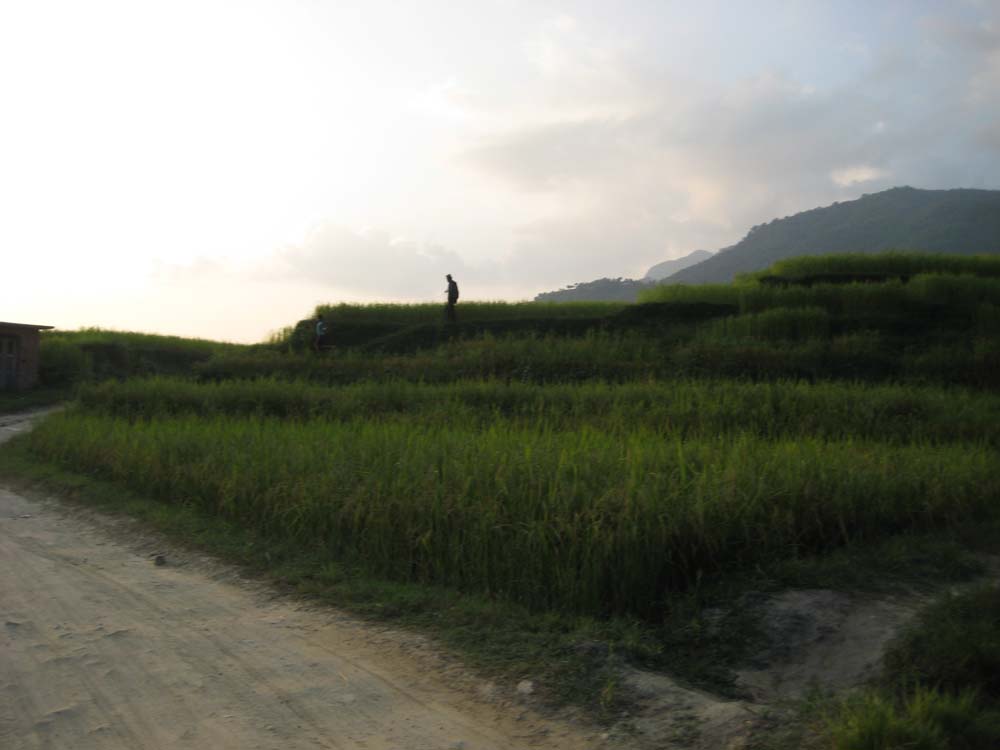
My best memories of places I have been almost invariably involve walks: Walking through the bush in Belize just at that magical time around sunset when the air itself becomes tinged a rose gold… Walking the paths through the rice fields in Nepal and literally stepping aside off the path to allow a rather large monkey to pass by… Wandering aimlessly through the alleyways of Boudhanath in Kathmandu… Walking up interminable mountains in Tibet to unspeakably sacred places… Walking slowly through the national cemetery in Prague and realizing that the honored heroes are almost all artists, writers, composers…

Humans are made for walking, and it is in walking that we experience life on a truly human scale. It is also how I come face to face with images for my camera! I shall no doubt enjoy my week of travel with a rented car through the Dordogne of France, but I suspect the walks will be the most memorable part of this journey.

Getting Ready for the Journey

August 15, 2013

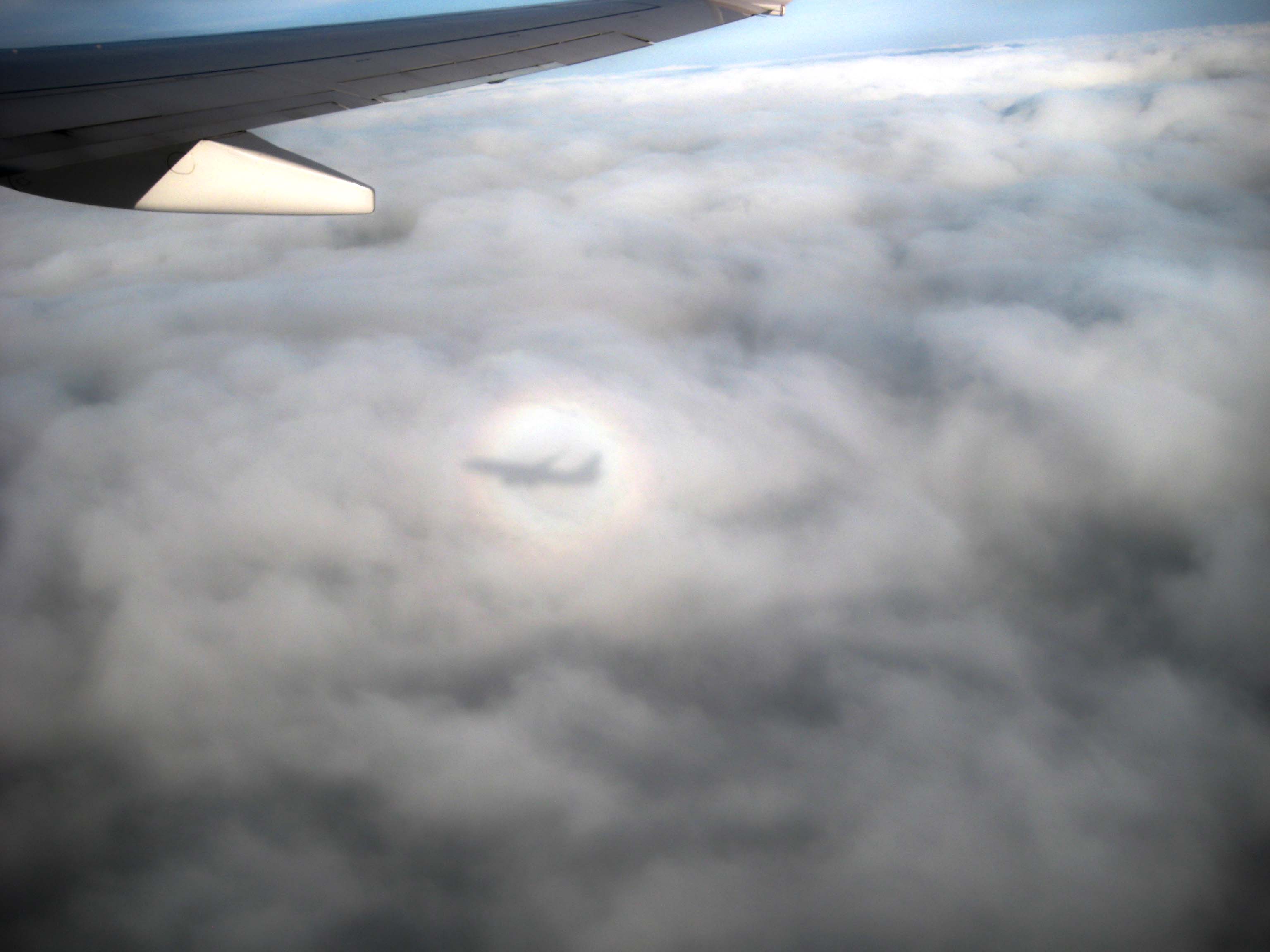
The airplane’s aura…

The airplane’s aura…

In just a couple of weeks, I will begin a much anticipated journey.  My first destination will be Barcelona, Spain, with its wealth of art, architecture, and history.  After a week in Barcelona, I plan to rent a car and spend another week driving around northern Spain and southern France, particularly the Dordogne and some of the sites of mankind’s earliest artistic creations.  Then it will be back to Barcelona and a long flight to Kathmandu, Nepal, where I have spent so many treasured days in recent years.

When I was still teaching cultural anthropology, I found it curious that students always assumed that one of the greatest advantages of the invention of agriculture was that it permitted human beings to “settle down.”  And yet… how we love to travel!  Nothing stimulates the human mind more directly and completely than the experience of new places, new people, new experiences.  Nothing enlarges our sense of ourselves more than the adoption of multiple “homes” – multiple places where we know the ways of the “natives” and know our way around the country.  In this journey, I will encounter many new places and revisit some familiar ones.

It all begins very soon.