Divided We Fall

What Have We Built?

What Have We Built? (24 x 24, $450)

The country of my birth (and the birth of at least five generations of my direct forebears) is more deeply divided now than it’s been since the Civil War. And the most dangerous thing about today’s division is that a large group of our citizens find themselves utterly beyond the reach of fact and reason. They have succumbed to the insidious belief that belief is all that matters, that all facts are relative and that science is an anti-religious plot. They have elected as their standard-bearer a reality show star with dubious business credentials and they cheer shamelessly at his invective-laden lies du jour and eagerly transmit fake news created by amoral entrepreneurs and Russian operatives who have never believed in the American version of democracy and who are now undoubtedly wriggling with delight at its demise.

How did we come to this? It hasn’t happened overnight. We’ve seen it coming (or should have) for a long time, primarily in our schools, in our courts of law, and in our newspapers.

In our schools, teachers became too timid to speak with conviction about the scientific facts of climate and evolution. They accepted bullshit as a “science project” and rewarded pretty presentations more highly than ragged attempts to grapple with truth. Schools backed off too readily when parents objected to particular literary works or found new historical research findings incompatible with what they were taught when they were in school. And if the teachers were resistant (and many, God bless them, were) then the science deniers and history skeptics took control of school boards and pushed their agenda harder.

In our courts, lawyers increasingly found it easier to plant seeds of doubt rather than assemble hard evidence to support their cases. Discrediting opponents via query and innuendo and disputing their stories via hand-picked “experts” who could be relied on to say what was needed became accepted practice. Lawyers became adept at obfuscating the very nature of facts and truth and were highly rewarded for their skill.

In our newspapers, editors tried too hard to provide “balanced” coverage and thereby led readers to believe that points of view with no basis in fact or logic had equal merit with the views of highly educated and experienced professionals, people who had dedicated their lives to investigating the subjects in question. As the digital age impinged upon journalism, selling papers or garnering viewers and clicks became more and more challenging and a hot story became more important than in-depth coverage. They printed or broadcast anything anyone in the public eye said and rarely bothered to follow up with fact-checking. As long as they had a source on the record, they put it out there for the public to consume.

So here we are, weeks away from the official launch of the Trumpocracy.

I don’t know where we go from here. What I do know is that we must stay focused on verifiable fact, sound logic, and reasoned argument and that we must do that because that is who we are. We are people who cannot give in to the desire to fight bias with bias. We are well aware that those on the other side cannot be swayed by fact, logic, and reason. Nonetheless, we soldier on, speaking truth, marshaling facts, reasoning logically, and knowing that we don’t stand a chance unless we know precisely where we stand: We do not stand united.
What To Do?

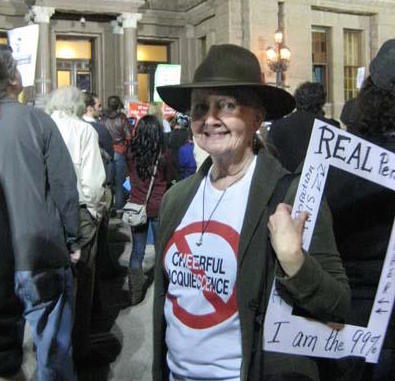
nocheerful

Lately I find myself remembering a particularly volatile time we went through at the University where I used to work. Things got extremely political and there was a lot of hateful talk and distrust. Some of us prided ourselves on our activism and clever words. We became distracted and self-important. Others just hunkered down and did what they needed to do to advance the actual work of their departments and their students. When the shit-storm finally passed, guess who came out on top?

So now, in the context of a much bigger shit-storm, I think it’s time to consider what kinds of words and actions are useful and which ones are just making us “feel better”. Here’s a short (and unquestionably preliminary) list.

  • First, consider the things that have no substantive effect:
    • “Liking” and “reacting” to posts on Facebook and re-Tweeting stuff.
    • Sharing anything that comes from blatantly partisan pages and websites.
    • Embedding ourselves in an echo chamber where we hear words and words and more angry words from people who think exactly as we do.
    • Signing every online petition that comes along.
    • Posting on Facebook that we’re praying about it.
    • Protests that are only opportunities to vent. If there is no clear intent, demand, or message, then it’s probably a waste of time.
    • Buying and wearing T-shirts with pictures of Bernie that say “Hindsight – 2020”. Or similar. (I just really liked that one.)

I’m not saying not to do these things – just don’t fool yourself into believing they actually help. Also, I’m not saying that feeling better is of no value. Certainly supporting one another (for example, on Pantsuit Nation) and offering words of encouragement and solidarity are important things. It’s just that it’s not enough.

  • Now here’s a to-do list of a few things that might actually help:
    • Be well informed. This means reading – all the way to the end – well researched pieces from actual experts and real journalists. Sharing these is also useful. Everything else on this list follows from being well informed.
    • Get involved in activities and organizations that promote and protect the people and activities that are currently threatened. And by “involved”, I mean volunteering and actually DOING something.
    • Pay attention to local politics and show up to meetings and events that can have an impact on community policies and decisions.
    • Allocate resources to organizations that are having an impact. But never, never feel that giving money is enough.
    • Reassess the values you promote in your own work and lifestyle and stay aware of how this impacts the bigger picture.
    • Refuse to be distracted. Stay focused.
    • Live your life as if the world you believe in actually exists.

I’m sure there are lots of other things that could be added to both lists and I encourage comments. Yes, writing this made me feel better. Now to get busy and do something that might actually help.

Morning. After.

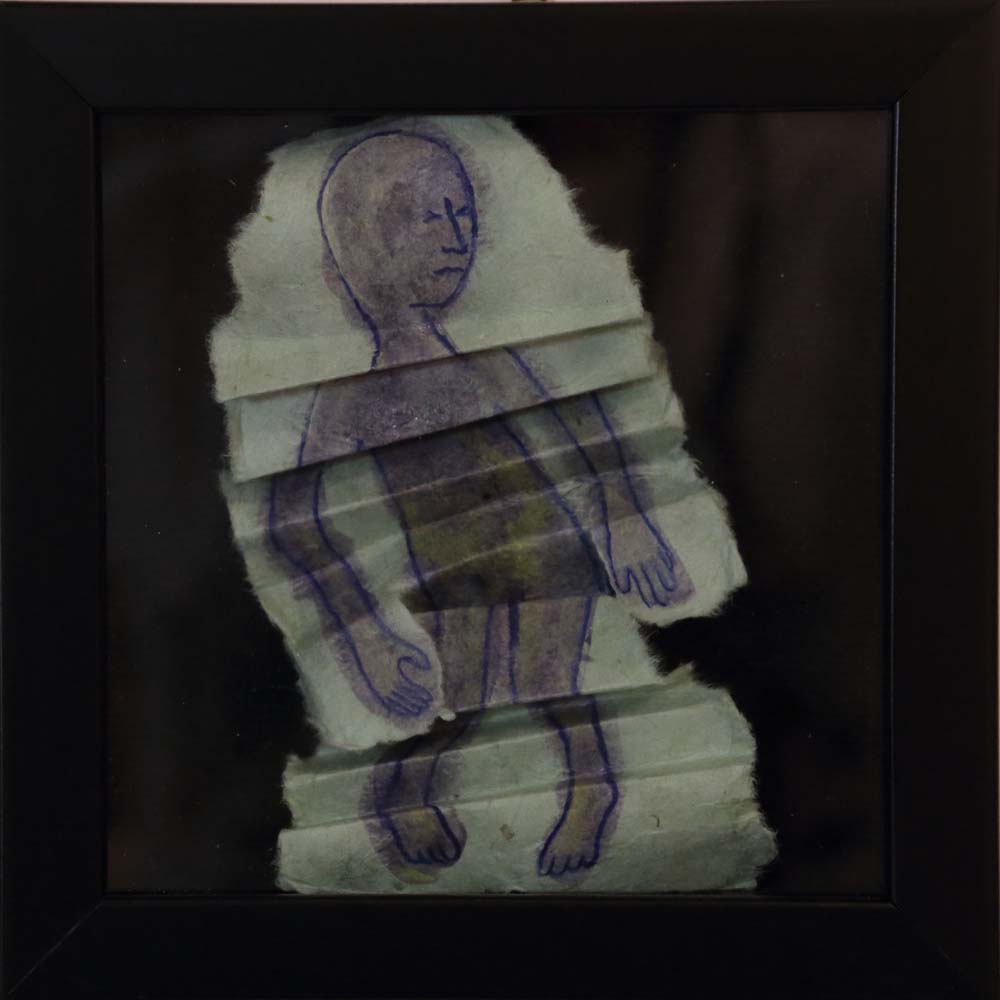
"Discouraged" 8 x 8 shadowbox

“Discouraged” 8 x 8 shadowbox

11/11/2016
Early morning walk.
I greet my neighbors.
“Morning,” I say in passing.
I can’t yet say “Good morning.”
It isn’t good.
And it won’t be good
Until
Everyone can feel as safe as I do
Walking through their neighborhood.
And mine.
Until the woman in the headscarf,
The youth in the black hoodie,
The man who is fluent in Spanish,
The lady in the wheelchair,
Until all of us can be safe.

Safe when we roll down the car window
For the policeman who pulled us over.
Safe when we put our arms around
The one we love
Right out there in public
No matter who it is we love.
Safe when we speak a language
Other than English
Or English with our parents’ accent.
Safe when our disability means
Maybe we take a little longer at the ATM.
Safe when we’re the only woman on the bus.
Safe when our visa has expired and we’re
Too scared to go back to our broken country.

I want to know what it’s like to be you.
I can put on a “Black Lives Matter” T-shirt
And experience the hateful stares and scoffing comments.
But I can also take it off.
It doesn’t tell me how you feel every day
Walking around in the skin you were born with.
I can speak Spanish with my friends
But no one assumes I don’t speak English.
I can wear a headscarf like I did on cold, windy days
When I was a girl. We all did that.
No one would assume I was a terrorist.

I don’t ask that we always be comfortable.
Only safe.
Because safe is really important.

I have done nothing to deserve my privilege.
You have done nothing to deserve less.
Someday I will go for my morning walk
And say “Good morning!” to everyone I meet
And mean it
And know it is also a good morning
For you.
Until then
We have work to do.
Please, can we do it together?

Privilege

“For those accustomed to privilege, equality feels like oppression.”

I don’t know who said this first, but the words keep coming to my mind as an appropriate response to posts and comments all over social media’s political spectrum. People are saying all kinds of horrible things to one another because they’re hurting, and in many cases they’re hurting because they’ve lost some kind of privilege and they resent it. It got me to thinking about what kinds of privilege we – various ones of us – have become accustomed to. Here’s a quick checklist:

  • White privilege. This is universally apparent to people of color but often elusive to white people themselves. Ourselves. Some white people like to claim being “color blind” and to not notice color. This has no impact on privilege. Others readily make the leap from embracing white privilege to claiming white supremacy. (As an anthropologist, I could go on for pages and pages about the irrelevance of “race” to the human genome although not to the human experience. But that’s not what this post is about.)
  • Male privilege. This has been eroding away for decades. Is it any wonder many men are all too ready to follow the lead of a swaggering “alpha” male who exemplifies all the benefits of privilege they feel they’ve lost? A lot of women – perhaps fearful of being labeled a feminazi – still believe in male privilege, too, identifying with the sexy helpmate image the males assign them and seeking out the most swaggering domineering males they can find. It makes them feel protected or something.
  • Christian privilege. Suddenly there are Muslims and Hindus and Buddhists openly practicing their faith, openly not being Christian. Christians are horrified. Isn’t America “supposed” to be a Christian nation?
  • Marketplace privilege. Protected industries like oil or coal or manufacturing fall victim to “green” industries, robots, and offshoring, and people whose jobs and family history are tied to those industries feel robbed. They still work hard or are willing to if given the chance. They want to know who took their jobs, the jobs they thought they were entitled to.

As privilege erodes, those who have enjoyed the benefits of privilege feel deprived, hard-done-by, oppressed. Worse than that, though, is when people tell you you’re in one or more privileged category – white Christian male working in the oil patch, for example – and your life still sucks. These are Trump’s people. They want the privilege they were promised but never got. They want to “Make America Great Again”. Like it never was for them.

REVIEW: The Association of Small Bombs

smallbombsI don’t do book reviews very often, but I’m making an exception.  That’s because Karan Mahajan’s THE ASSOCIATION OF SMALL BOMBS is hands-down one of the most important books I’ve read in a long while. It begins with an act of terror – the explosion of a small bomb in an ordinary marketplace in Delhi – and follows the reverberations of the event backward and forward in time in the lives of both victims and perpetrators, exploring the unexpected yet inevitable interconnections and ultimately explaining better than I would have thought anyone could exactly what this thing called terrorism is all about. “You turn into what you hate,” one of the characters observes. I’m afraid he may be right.

Same and Different

CB017727

As I continue to read all the words flowing forth from both the wise and the foolish in the aftermath of Orlando, I keep pondering, “What can we do to prevent such a thing happening again?” Yes, we definitely need to do something about the ready availability of such powerful tools of death as were used in this instance. I applaud the efforts of the Senators (not mine – I’m from Texas) filibustering to compel their colleagues at long last into action. But we also need to do something about the hate that fueled this particular outrage – the hate directed against, as it’s often put, people who are “different”.

What does that word even mean these days? Different? Different from what? Just as humans don’t inhabit skins of a limited number of colors – black, brown, white, yellow – but instead come in a marvelous gradation of every color and combination, we also don’t come in only two genders. This realization shouldn’t come as a surprise; human cultures around the world have made room for these non-binary gradations in gender and sexuality for centuries.

In order to combat the hate coming from the stubborn gender dualists out there, we need a new and empowering alliance of all people who want to challenge such stifling gender definitions. We need to come together as LGBTQ folks and cis-gender feminists and men who are weary of the old macho mentality. We need to embrace one another as members of one incredibly diverse and beautiful array of human possibilities.

In a sense we’re all different. And all the same, all beautiful manifestations of exactly what it means to be human. We need each other in order to know, experience, and understand the full reach of our humanity.

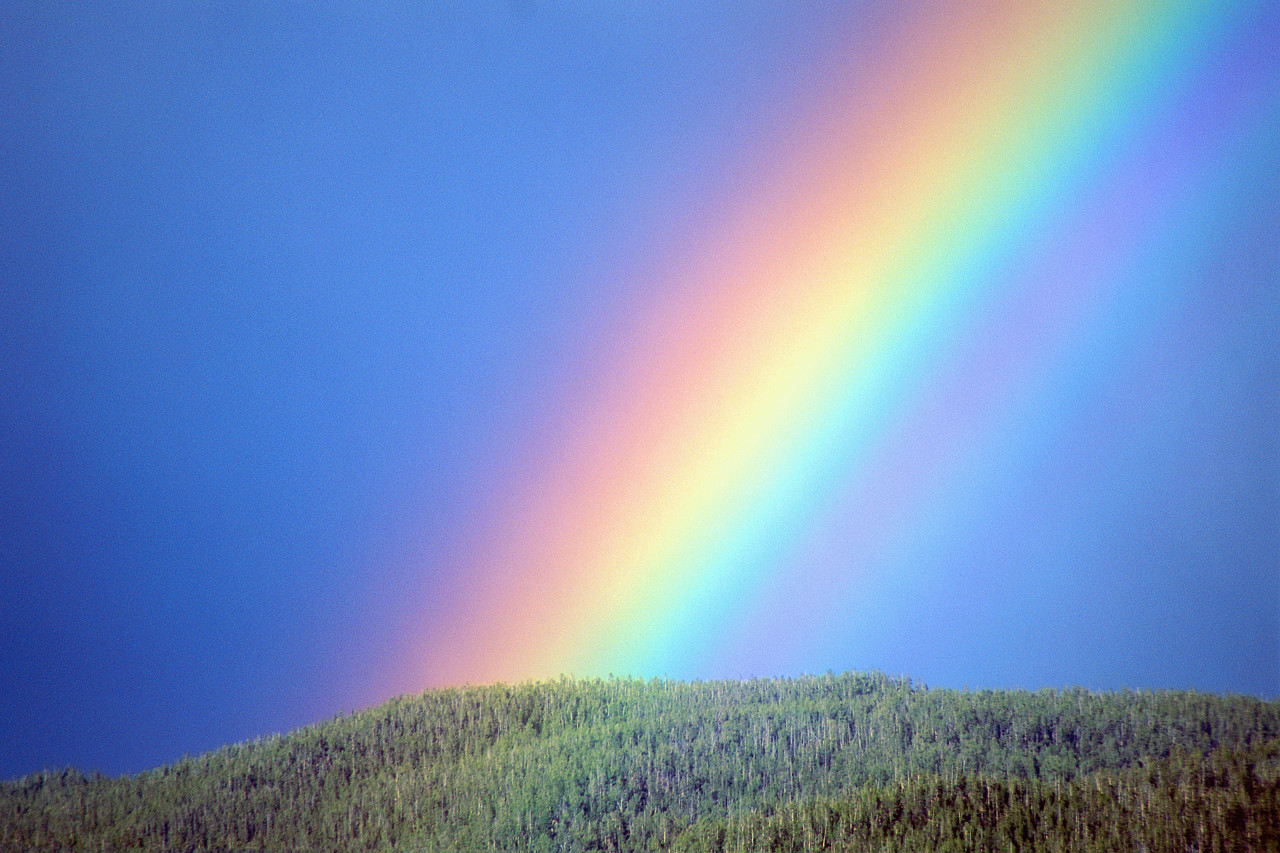
Be the rainbow, y’all!

“This Changes Everything?”

Aug. 1, 1966: A man with a gun shot and killed 16 people from a university tower at the University of Texas in Austin before being shot by police.

Maybe we should change some things.

July 18, 1984: A man with a gun killed 21 adults and children at a McDonald’s in San Ysidro, Calif., before being killed by police.

Surely, there are things that should change.

Aug. 20, 1986: A part-time mail carrier with a gun killed 14 postal workers in Edmund, Okla., before killing himself.

This should change things.

Oct. 16, 1991: A man crashed his pickup through the wall of Luby’s Cafeteria in Killeen, Texas. With his gun, he shot and killed 23 people before committing suicide.

Would this change things?

April 16, 2007: A student with a gun went on a shooting spree at Virginia Tech in Blacksburg, Va., killing 32 people, before killing himself.

Certainly this will change everything.

Nov. 5, 2009:  A man with a gun killed 13 people and injured 30 others at Fort Hood near Killeen, Texas.

Things have to change.

July 20, 2012: A man with a gun killed 12 people in an Aurora, Colo., movie theater.

This has to change everything.

Dec. 14, 2012: A man with a gun killed 20 children and six adults at Sandy Hook Elementary School before killing himself.

Now. Now this will change everything.

Sept. 16, 2013: A man with a gun killed 12 people and injured three others at the headquarters of the Naval Sea Systems Command in Washington, D.C. He was later killed by police.

Will things ever change?

June 18, 2015: A man with a gun killed nine people at a weekly Bible study at the Emanuel African Methodist Episcopal Church in Charleston, S.C. The dead included the pastor Clementa Pinckney; a 10th victim survived. The suspect said he wanted to start a race war.

This is it. This is the one that will change everything.

July 16, 2015:  A man with a gun opened fire on two military installations in Chattanooga, Tenn. The first was a drive-by shooting at a recruiting center; the second was at a U.S. Navy Reserve center. Four Marines and a Navy sailor died; a Marine recruit officer and a police offer were wounded. The shooter was killed by police in a gunfight.

Nothing has changed.

Oct. 1, 2015: A man with a gun killed an assistant professor and eight students in a classroom at Umpqua Community College near Roseburg, Ore. After a shootout with police, he committed suicide.

Nothing has changed.

Nov. 27, 2015: A man with a gun attacked a Planned Parenthood clinic in Colorado Springs, Colo., killing a police officer and two civilians and injuring nine others. The shooter was taken into custody after a five-hour standoff and charged with first-degree murder.

Nothing has changed.

Dec. 2, 2015: A married couple with guns opened fire at a San Bernardino County Department of Public Health training event and holiday party, killing 14 people and injuring 22 in a matter of minutes.

Nothing has changed.

June 12, 2016: At least fifty people dead in a shooting at a popular gay nightclub in Orlando, Florida.

Whatever Became of Books

books

Malia Poole, the protagonist in Shadow of the Hare (Vol. II of the Recall Chronicles), worked at a secondhand bookstore called Codex2 for nearly thirty years, during which “the story industry” was transformed by the rise of the plutocracy. It was a difficult time for a dissident author like Malia, but not an altogether unhappy time.

We worked together, conspiring with friends who shared our distaste for the society as it was, as it was becoming. There were periods of anger and frustration, but there was camaraderie in the midst of it. The further they drove us underground, the stronger our bonds became. We trusted no one but one another. We found ways of avoiding the corporate police, moving in the shadows, the interstices, doing what we needed to do without attracting too much attention. It wasn’t the most effective form of activism, but we became expert at being invisible. 

Shadow of the Hare is available for preorder.

Free download of Way of the Serpent expires at midnight, April 9.

Plutocrats for the Plutocracy!

Republican presidential candidates, former Florida Gov. Jeb Bush, right, and Donald Trump both speak during the CNN Republican presidential debate at the Ronald Reagan Presidential Library and Museum on Wednesday, Sept. 16, 2015, in Simi Valley, Calif. (AP Photo/Mark J. Terrill)

(AP Photo/Mark J. Terrill)

My next book – coming out in May! – is sort of a prequel to Way of the Serpent in that the protagonist, Malia Poole, recounts her memories of what life was like during the last half of the 21st Century. Some of these memories deal with political changes during those years so I thought that now – in the midst of an especially tumultuous American election year – might be a good time to share some of Malia’s observations.

“I finished high school in our neighborhood there in Philly at what was called at the time a public school. It was, as I recall, supported by some local governing body. There were still a few local governments in the late 2020s and elections were held for various offices of the state of Pennsylvania as well as the United States of America right up to 2044. I only voted a couple of times after I became eligible in 2033. Hardly anybody voted by that time. We were resigned to the fact that the so-called governing bodies – from city councils right up to the Congress and President of the United States – were all a sham. The turnout for elections kept dwindling, and eventually almost all of those who voted were people who had been paid or otherwise obligated by their employers (that is to say, by the plutocrats) to vote for the “right” people. After the 2044 election, the plutocracy decided that their wealth would be better spent on less divisive entertainments, so elections were discontinued.”

There are also a few insights in this passage, a conversation between Malia and her friend Lio:

“You realize, Malia, that governments are on the verge of becoming obsolete,” Lio said. “Already they work only at the bidding of the plutocracy. And now more and more of those elected to government positions are themselves plutocrats. At some point they’ll stop convening the legislatures and parliaments, close the presidents’ and prime ministers’ and governors’ offices, pay the judges one last time and send them home with fat pensions. And we won’t notice the difference, because there won’t be any.”
“What will happen to people like us?” I asked.
“As long as we behave ourselves like good consumers, we’ll just keep doing our part to keep them rich and getting richer.”
“That’s not what I meant.” I scowled at Lio. “I meant people like you and me.”

People like us (this is me talking again) should be very, very concerned about this election. I don’t think we’d like the 22nd-century world I’ve imagined in my books!

Read more from Donna Dechen Birdwell.