
This will be one of my last “double-posts” before everything goes on Substack. Come and join me there!
This will be one of my last “double-posts” before everything goes on Substack. Come and join me there!
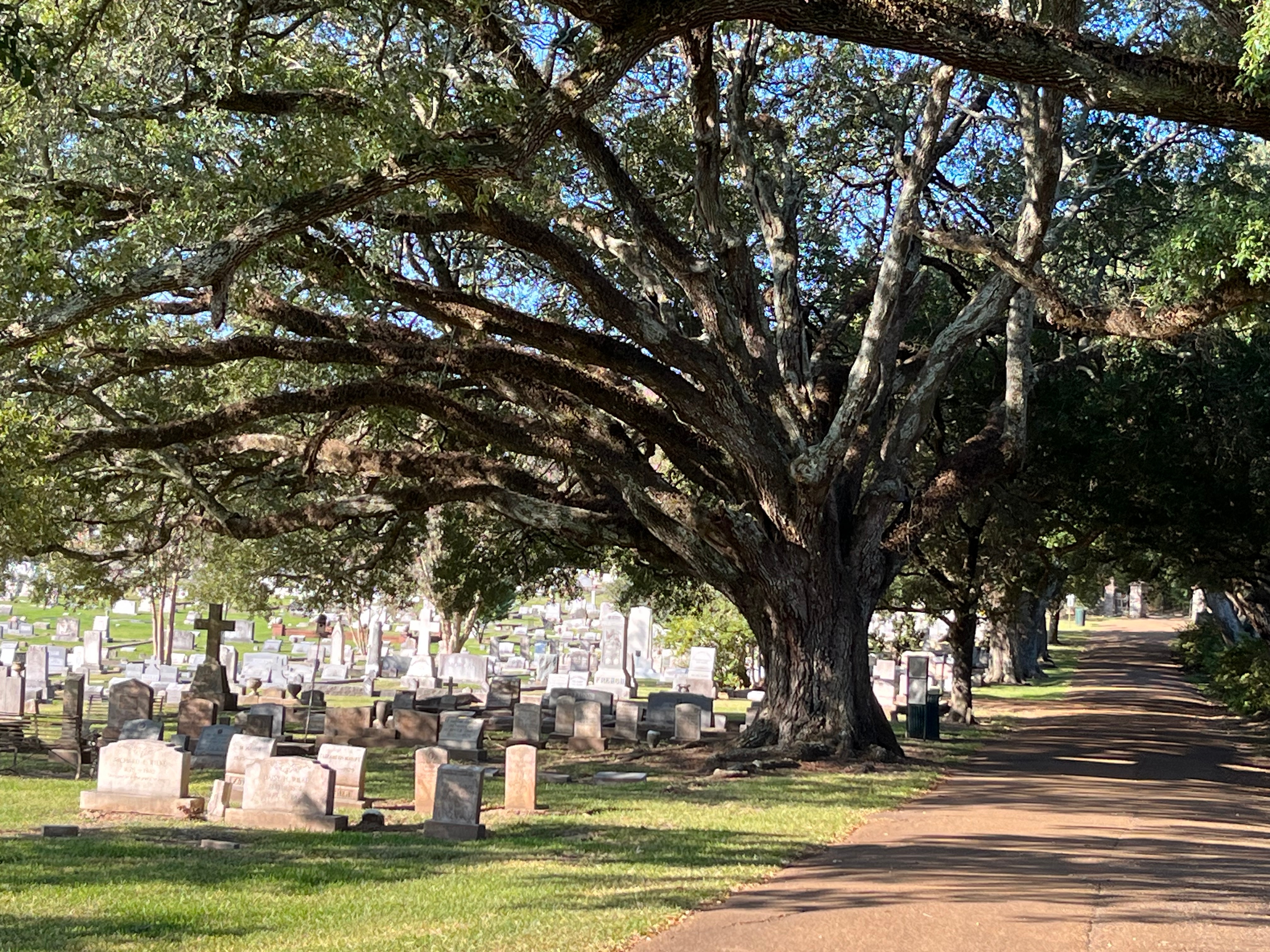
Narcissa June Tarver is a figment of my imagination, conjured as the vehicle for a story I needed to tell about some of my ancestors and collateral relatives who lived in southern Mississippi in the years after the Civil War. I crafted her carefully. I made her by far the youngest in her family in order to make her an uneasy bridge between generations. I gave her a minor disability in order to make her of questionable marriageability. But even as she performed her assigned function, she began to take over, to assert herself as someone who had her own story to tell.
At this point, I was still calling her “Lucy,” but that increasingly didn’t seem to fit. Besides, there were too many other characters in Southern fiction called Lucy. One evening on my second trip to Natchez, as I was perusing names in my family trees and census records, I paused over the name “Narcissus,” which had been the middle name of one of my great-grandmothers. I liked it, but I wasn’t sure. The next morning, before leaving Natchez for Jackson, I looked through a book in my AirB&B about the Natchez cemetery. I noticed an odd looking grave of a fellow named Rufus Case (possibly a relation) who had reputedly been buried in his rocking chair. I resolved to search out the grave before leaving town. I found it. And on another side of the weirdly cubic marker was the name of another person buried there: Laura Narcissa Case. That clinched it. I couldn’t help but wonder if my main character hadn’t just told me who she wanted to be.
And so the story of The Disenchantment of Narcissa Tarver evolved—as works of fiction often do—as a collaboration between author and characters. Narcissa refused to be submerged in the tumult of her brother’s political career, consistently finding ways to play her own role in his very real world. I had to let her have her way. And now that her story is written and soon to be published, I think she may want more. A sequel? A story about the rest of Narcissa Tarver’s life after her “disenchantment”? That could happen.

One of my current writing projects—the one that is pulling at my sleeve most insistently at the moment—is not science fiction. It’s historical fiction. Is that a weird change of direction for me? Somehow, it doesn’t feel like it.
This morning I searched out the following words from my writing hero, Ursula Le Guin. Her perspective gives me welcome insight into my writing transition. Le Guin begins her brief essay by acknowledging our conventional assumption that the future (the usual subject of science fiction) is what lies in front of us, while the past (the subject of historical fiction) lies behind us.
“It seems that the Quechua-speaking peoples of the Andes see all this rather differently. They figure that because the past is what you know, you can see it—it’s in front of you, under your nose. This is a mode of perception rather than action, of awareness rather than progress. Since they’re quite as logical as we are, they say that the future lies behind—behind your back, over your shoulder. The future is what you can’t see, unless you turn around and kind of snatch a glimpse. And then sometimes you wish you hadn’t, because you’ve glimpsed what’s sneaking up on you from behind….” (“Science Fiction and the Future” in Dancing at the Edge of the World, 1989)
As I continue reading and researching the history of the American South (especially Mississippi) and the history of Scotland, both entangled in my own family history, I begin to see our future more clearly. I hope my story can bring the same kind of clarity to my readers.
Le Guin, Ursula K.. Dancing at the Edge of the World: Thoughts on Words, Women, Places (p. 215). Grove Atlantic. Kindle Edition.
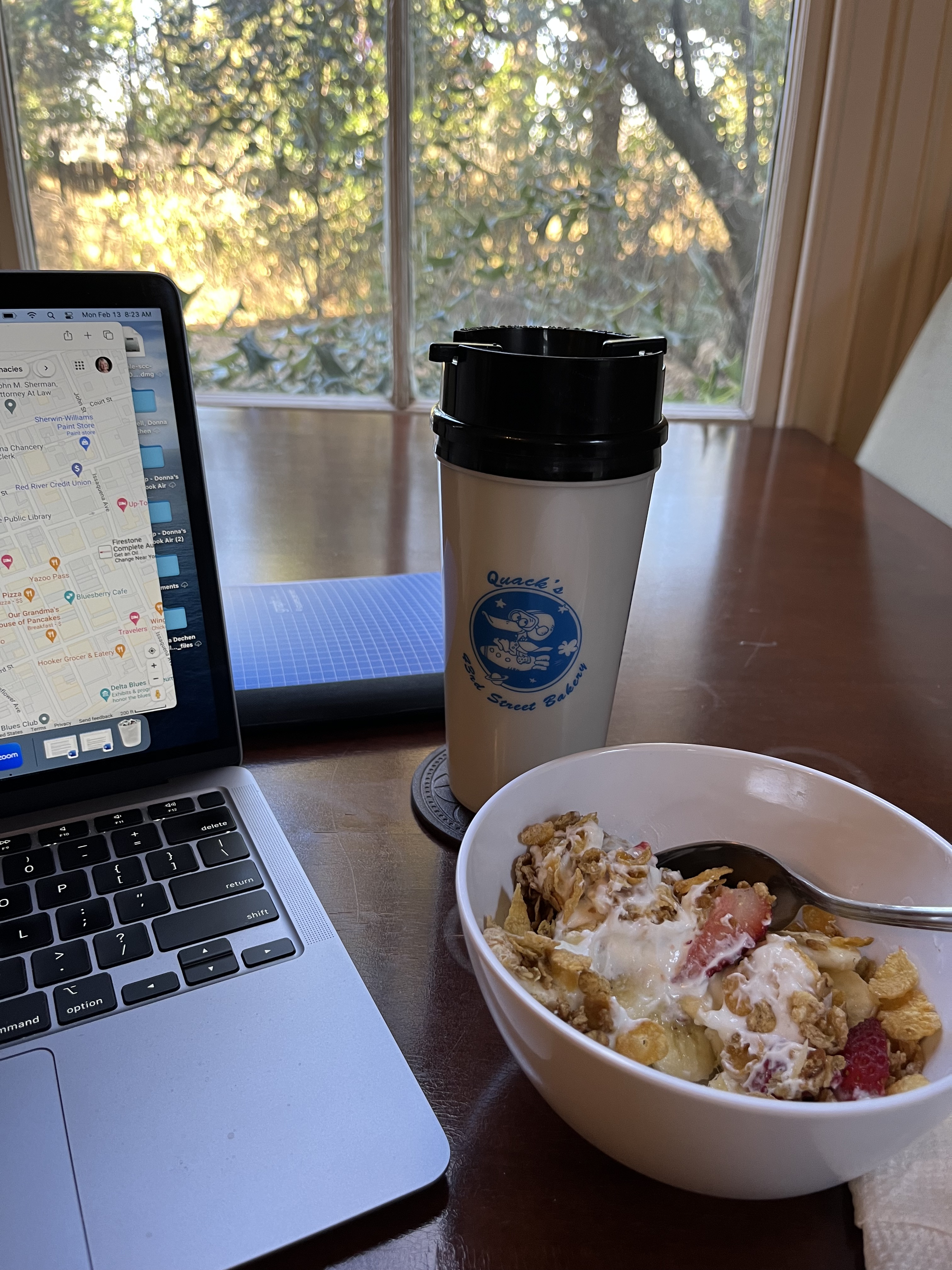
I sit eating my simple breakfast and watch a bird out the window as it hops and flutters from branch to twig and back again. An ordinary little thing, busily following the urges of its feathered kind to eat, stay safe, reproduce.
We humans have the same urges, except in more complicated form. We’ve turned dining into an art form, an industry, an elaborate set of social rituals. We seek safety not merely from the elements or true predators, but also from concocted and cultivated enemies. Reproduction? Necessary as always for the continuance of the population, but when is the last time we’ve really cared about that? No, we follow the urges—sexual and intimate—for their own sake. When we find an intimate partner whose company we would like to have as a fixture in our lives for the foreseeable future, we may embark on the project of bringing another generation into our circle. Whether we do that via our own sexual act or by adoption or surrogacy seems to matter little these days. However we do it, it results in continuity. The population continues. The species continues.
Some of us participate in continuity in other ways, choosing or accepting not bringing another generation into our intimate circle, while being useful in other ways to our society and culture, ensuring continuation that nurtures the next generation.
On this road trip, I’ve been driven by the desire to learn more about a particular relative of mine, a great-uncle who never had children, the kind of individual who is almost inevitably neglected by those of us who engage in ancestry projects of various kinds. I’m writing a story, but it won’t be a story about him. It will be a story inspired by what he’s teaching me. I’m almost ready to start writing it.
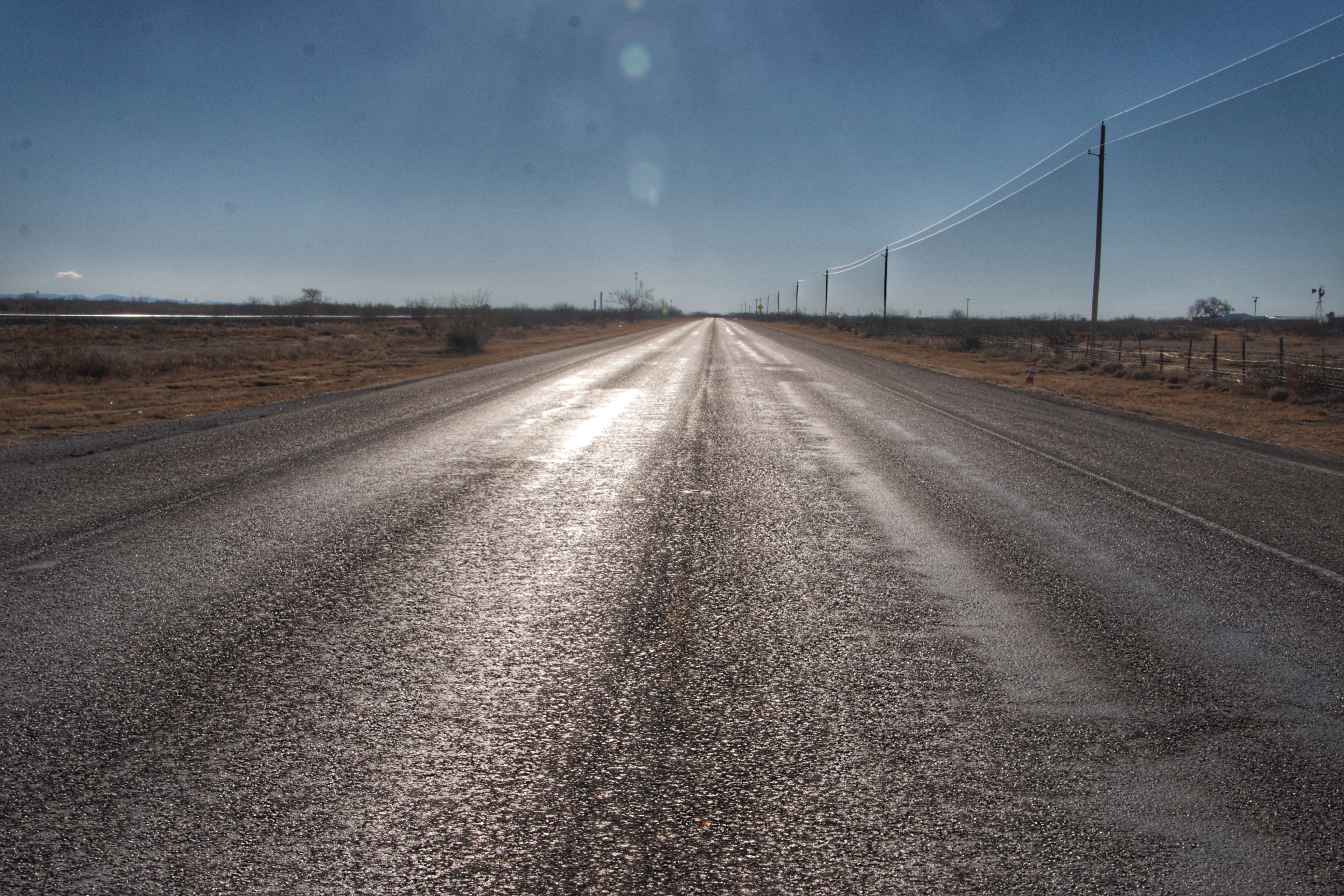
My last real “writer journey” was in March of 2016, when I traveled through New Mexico, Arizona, and west Texas collecting interviews and images and impressions for FLIGHT OF THE OWL, book 3 of my Recall Chronicles series. I took a wonderful journey to Ubud, Bali, in June 2019 as I prepared to release my one stand-alone contemporary fiction book—NOT KNOWING. A draft of the first book of my EarthCycles series (SONG OF ALL SONGS) was already in the hands of beta readers at that time, so my trip to Bali was not about researching or writing anything in particular, but rather about settling into a better understanding of who I am as a writer.
Writing got placed on the back burner at the beginning of 2020 as I temporarily took on a more active role as caregiver for my young granddaughter.
And then COVID happened. I found that I had lots of time for writing and kept moving ahead slowly despite the daily distractions of politics and pandemic. In the last three years I’ve published three more books: SONG OF ALL SONGS in 2020, BOOK OF ALL TIME in 2021, and BEYOND THE ENDLESS this year.
Now I’m returning to the Recall Chronicles to write a book four: FINAL RECALL. This story begins exactly where book three—FLIGHT OF THE OWL—left off, with Dextra and Jonathan and Gavin on a plane departing Costa Rica. But whereas Jonathan was the main character in FLIGHT, Gavin is the main character in this one. Major reorientation! They land in Santa Fe, New Mexico. So that’s where I’m going this week. And from there I will trace out the journey Gavin subsequently takes, going south from Santa Fe toward White Sands and then east into Texas. I can’t wait to take my imagination out on the open road!
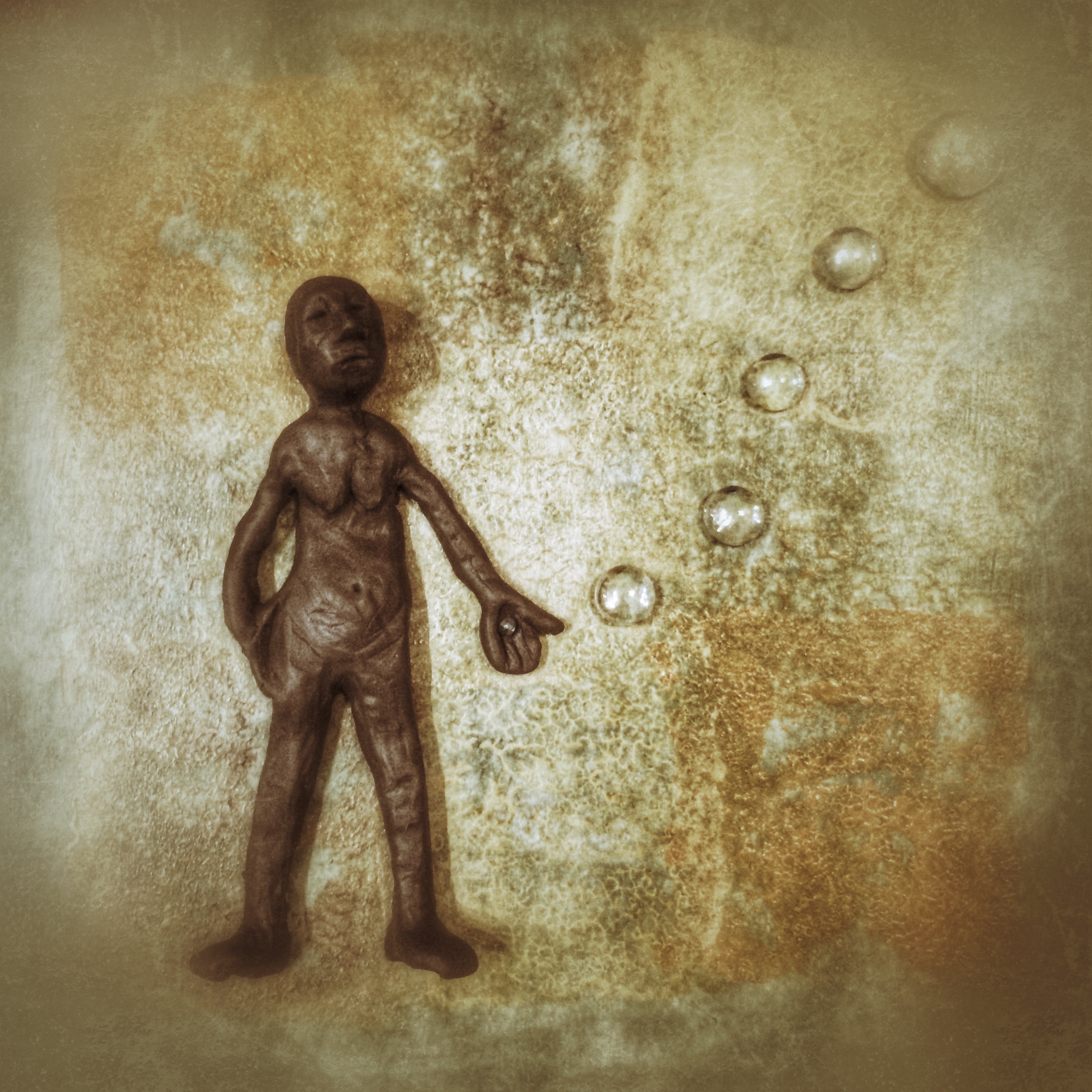
As I contemplate my imminent recovery from COVID and the onset of a new year, here is my one and only resolution: I resolve to have more good days in 2022.
A good day is one in which…
Happy new year to all! I wish you many good days ahead!

One of the joys of being a self-published author is that you can price your books however you like and if the notion strikes you to offer your readers a bit of a gift, you can do it without consulting anyone.
So here you go, dear readers: For a limited time, the ebook of Book of All Time (EarthCycles Book Two) is only $2.99. A whole adventure for less than the price of a latte! And you know Book Three is coming soon..!
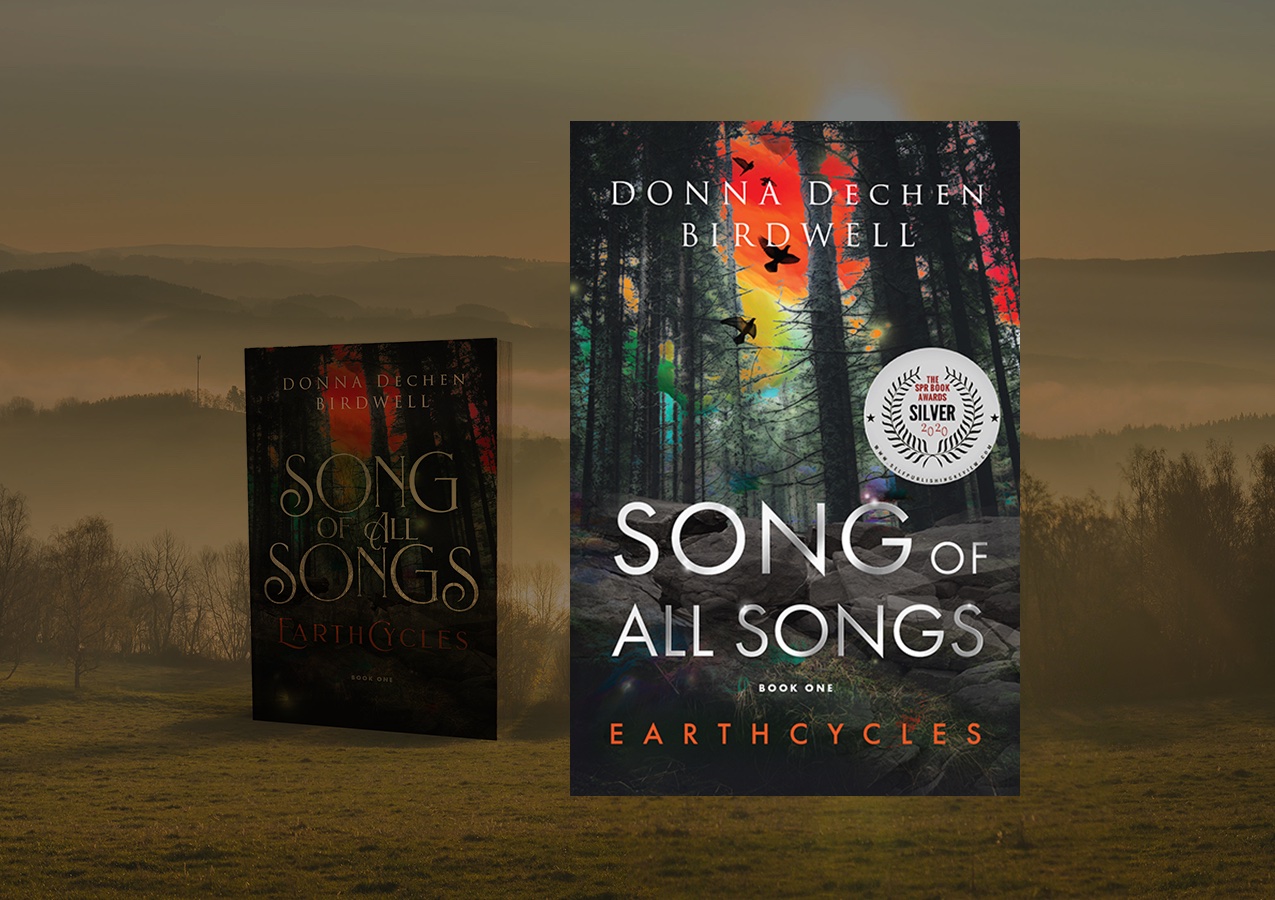
I know you’ve heard over and over that you shouldn’t judge a book by its cover. It’s a way of telling us not to judge people or situations on appearance. But with respect to actual books, people judge them by their covers every single day! The cover is how an author begins to tell their story, instantly setting up the reader to expect romance, thriller, cozy mystery, science fiction, fantasy, etc. The cover is a promise to the reader.
I reached the painful conclusion that the original cover for Song of All Songs promised too much “fantasy” and not enough “science fiction.” So I’ve changed it—commissioned a new cover that more faithfully promises what the story can fulfill.
Sometimes an author doesn’t fully understand what genre they’re writing until they’ve finished the story. This is especially problematic for anything within the category often termed “SFF”—science fiction/fantasy. When the author is an anthropologist, it gets even more fraught!
In many nonwestern cultures, there is neither “science” nor “magic,” and neither of those terms is especially relevant to the cultures I write in my EarthCycles books. There’s only what is. What works. When you write a story set in such a world, what genre does it belong to?
As I delved more deeply into the question of genres and sub-genres, I realized that all of my favorite books and writers can be encompassed within one (or both) of the sub-genres called “soft science fiction” or “science fantasy”—1984, The Handmaid’s Tale, N.K. Jemisin’s Broken Earth trilogy, almost everything Ursula LeGuin wrote, and my latest favorite—Remnant Population by Elizabeth Moon.
I’m hopeful that my new cover—and in fact the entire set of covers for the EarthCycles trilogy—will more faithfully communicate to readers what kind of story they can expect to find inside.
It’s not pure fantasy (as the original cover may have signaled), although it checks many of the boxes of what constitutes fantasy literature. The story’s setting in Earth’s far, far future is a critical departure from most fantasy tales, which tend to take place in the distant past. Most importantly—there’s no magic! There’s more than a touch of mysticism, but those who engage in it don’t call it magic. Of course…all of this depends on how you define magic.
The story is also not classic science fiction—there are no spaceships or extraterrestrials, no super-duper technology. The story is firmly grounded on a post-apocalyptic planet Earth, where much of our familiar 21st-century technology has been lost. The fact that some of the operational principles aren’t what purists might classify as science makes no difference—within the context of the story, these things are facts of life. Reality. Not magic. The focus on social evolution and social relations places the story in the sub-genre of “soft science fiction,” so called because of its reliance on the “soft sciences” such as psychology, sociology, political science…and anthropology? Well, there’s another conundrum: Anthropology studies culture, society, political systems, language, religion, but also genetics and evolution and technology. You did know I have a PhD in anthropology, right?
I hope you love the new covers as much as I do. If you want a sneak peek at the cover for book two—Book of All Time—click HERE. It’s coming in August!
And just in case you haven’t read Song of All Songs yet (what are you waiting for??) watch Goodreads for a special giveaway, going on the entire month of June!

I woke up a couple of days ago dreaming of a burning house. I was inside the house, but I wasn’t trying to get out. I wasn’t even particularly disturbed. I had closed the door to my room, trying to ignore the growing conflagration in the rest of the structure, apparently worried only about the collection of books on my shelves.
My first waking thought was: “My house is burning down with me in it.”
And I knew the dream wasn’t really about a house. It was about me, my aging body, and the fact that there truly is no way to escape. It’s burning down with me in it, and I just ignore it. I close the door and try not to think about it.
The dream may also be about the state of our world. Now that there’s no Donald Trump shenanigans to fixate on and now that COVID-19 is becoming something that is no longer an immediate threat to my life (Yay, vaccine!), I’m seeing more clearly the generally disastrous state of things—the racism and the misogyny and the poverty and the precarious climate and the probability of further pandemics and the belligerent ignorance and all the myriad manifestations of inequality and injustice that cluster on our borders and fester in our cities and towns. Our house is burning down with us in it. And we close the doors and try to pretend it isn’t happening. When some of us shout “fire,” others just look around inside their own rooms and shrug, ignoring the rising heat and all the closed doors.
What to do?
As for my aging body, I intend to pay more attention to exercise and other forms of self-care.
As for the world, I intend to emerge from my COVID isolation and keep saying what I see and what I know and writing stories about it. I may even occasionally shout, “Fire!”

 Donna Dechen Birdwell