These two books belong together! Both Way of the Serpent and Shadow of the Hare open with the same scene: Two women (who may have known one another in the distant past?) cross paths unexpectedly in a greasy spoon down a side street in Dallas. The encounter has a profound impact on both women, but in very different ways. Way of the Serpent is Jenda Swain’s story. Shadow of the Hare is Malia Poole’s story.
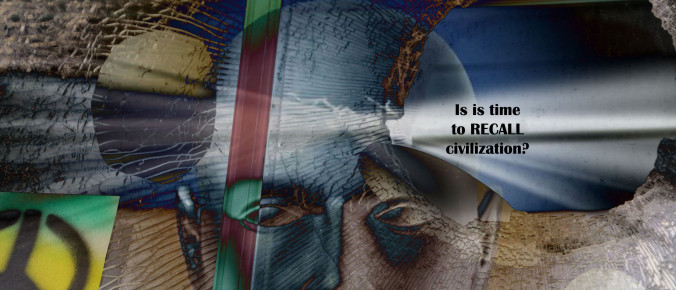
Ten years ago today, I published my first novel—Way of the Serpent. I’ve just finished reading through it again, editing and re-formatting in preparation for publishing it as part of a compiled two-volume collection of the four books of the near-future science fiction Recall Chronicles.
Way of the Serpent is a very political novel, and I had thought I might need to revise it a bit in light of what has happened over the past ten years. Instead, I found it to be even more pertinent today than it was in 2015. A government dominated by plutocrats? Check. A worldwide pandemic? Check. Concern over altered images and manipulated social media? Check.
Way of the Serpent will be paired with Shadow of the Hare in a single volume titled The Resistance, which tells you a little about who the two main characters—Jenda Swain and Malia Poole—are. If you haven’t read the Recall Chronicles yet ( or not recently), get ready for a satisfying dive into a political world a hundred years hence that feels all too believable. Get ready for The Resistance!
In a fit of anti-oligarchy rancor a couple of months ago, I unpublished all three volumes of my Recall Chronicles from KDP (Amazon). Why? These were the first books I ever self-published, and in my naivety I eagerly took advantage of the “free ISBN” offered by CreateSpace (now KDP). I didn’t realize that this restricted me to distribution ONLY within the Amazon space. I plan to republish all three books shortly, but in a new format: Books 1 and 2 will come out as a single volume, with book 3 coming back a bit later paired with the as yet unpublished book 4. All of these will publish under my own ISBN numbers so that they can be ordered and stocked by bookstores. If you’re going to be an independent author, go all-in indy!
One of my current writing projects—the one that is pulling at my sleeve most insistently at the moment—is not science fiction. It’s historical fiction. Is that a weird change of direction for me? Somehow, it doesn’t feel like it.
This morning I searched out the following words from my writing hero, Ursula Le Guin. Her perspective gives me welcome insight into my writing transition. Le Guin begins her brief essay by acknowledging our conventional assumption that the future (the usual subject of science fiction) is what lies in front of us, while the past (the subject of historical fiction) lies behind us.
“It seems that the Quechua-speaking peoples of the Andes see all this rather differently. They figure that because the past is what you know, you can see it—it’s in front of you, under your nose. This is a mode of perception rather than action, of awareness rather than progress. Since they’re quite as logical as we are, they say that the future lies behind—behind your back, over your shoulder. The future is what you can’t see, unless you turn around and kind of snatch a glimpse. And then sometimes you wish you hadn’t, because you’ve glimpsed what’s sneaking up on you from behind….” (“Science Fiction and the Future” in Dancing at the Edge of the World, 1989)
As I continue reading and researching the history of the American South (especially Mississippi) and the history of Scotland, both entangled in my own family history, I begin to see our future more clearly. I hope my story can bring the same kind of clarity to my readers.
Le Guin, Ursula K.. Dancing at the Edge of the World: Thoughts on Words, Women, Places (p. 215). Grove Atlantic. Kindle Edition.
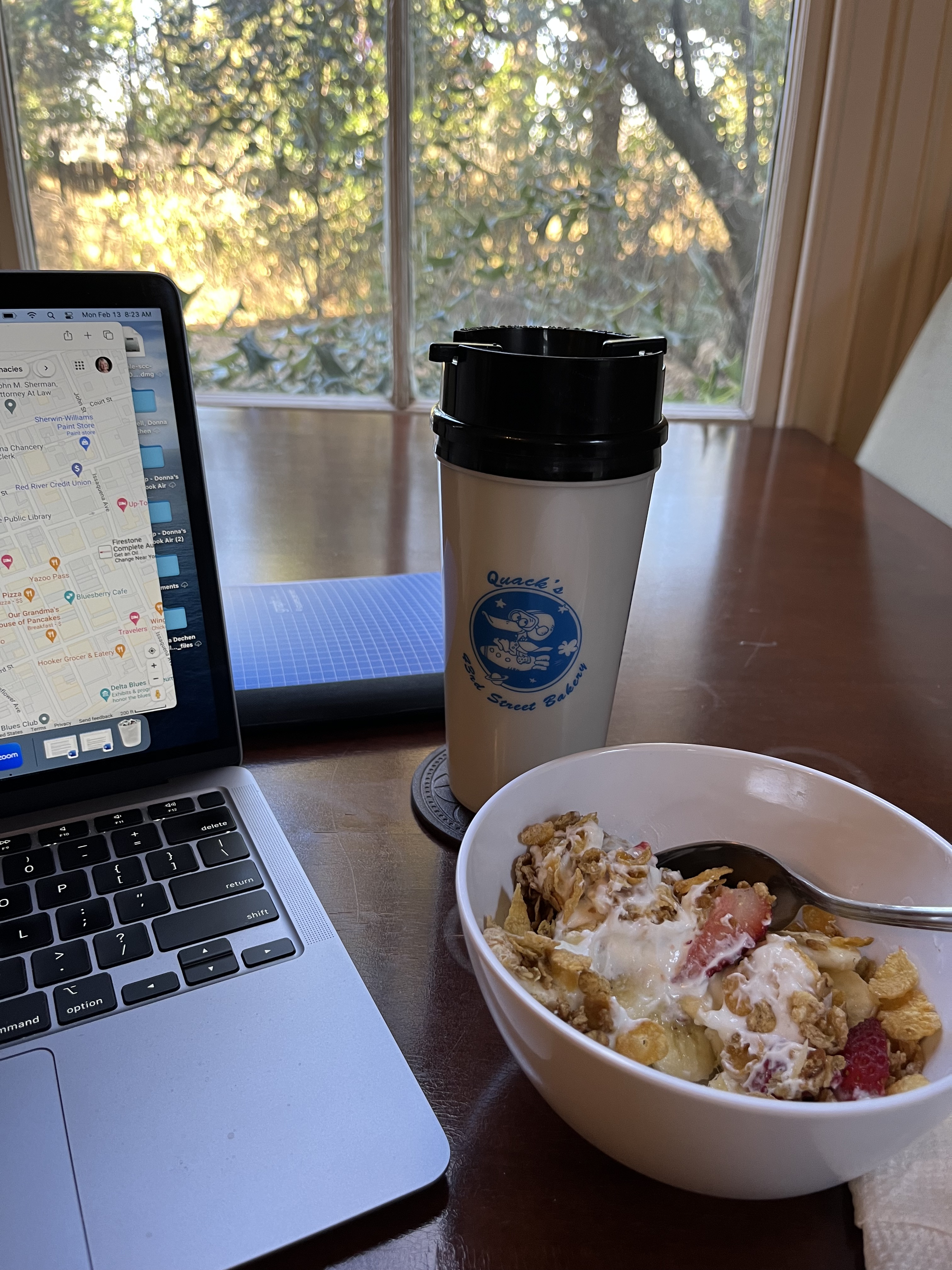
I sit eating my simple breakfast and watch a bird out the window as it hops and flutters from branch to twig and back again. An ordinary little thing, busily following the urges of its feathered kind to eat, stay safe, reproduce.
We humans have the same urges, except in more complicated form. We’ve turned dining into an art form, an industry, an elaborate set of social rituals. We seek safety not merely from the elements or true predators, but also from concocted and cultivated enemies. Reproduction? Necessary as always for the continuance of the population, but when is the last time we’ve really cared about that? No, we follow the urges—sexual and intimate—for their own sake. When we find an intimate partner whose company we would like to have as a fixture in our lives for the foreseeable future, we may embark on the project of bringing another generation into our circle. Whether we do that via our own sexual act or by adoption or surrogacy seems to matter little these days. However we do it, it results in continuity. The population continues. The species continues.
Some of us participate in continuity in other ways, choosing or accepting not bringing another generation into our intimate circle, while being useful in other ways to our society and culture, ensuring continuation that nurtures the next generation.
On this road trip, I’ve been driven by the desire to learn more about a particular relative of mine, a great-uncle who never had children, the kind of individual who is almost inevitably neglected by those of us who engage in ancestry projects of various kinds. I’m writing a story, but it won’t be a story about him. It will be a story inspired by what he’s teaching me. I’m almost ready to start writing it.
Today President Joe Biden turns 80 years old. If he wins a second term in 2024, he’d be 86 by the time he left office. A former President who has already declared himself a candidate is only four years younger than Biden.
Earlier this week, Speaker of the House Nancy Pelosi—who is 82—declared that she will step away from party leadership in the House of Representatives.
Biden and Trump should follow Pelosi’s lead.
This is not ageism. Clearly, two of these three politicians have still “got it” and have a lot to offer in terms of knowledge, wisdom, and experience. But why should we wait to retire until we can’t do the job anymore? We need to retire when it’s time to turn things over to the next generation.
The problem is not the old folks themselves, but rather the implications of their vital longevity for the generations coming up behind them. Never before in human history (I await correction if I’m wrong) have we found it needful to name successive generations—baby boomers, Gen X, Millennials, Gen Z—because there have never before been so many adult generations competing for access and relevance. (Earlier generations have been named only in retrospect.) Boomers have continued to hold fast to the reins of power while three generations of potential successors wait in the wings with increasing impatience. This election cycle saw the election to Congress of a member of Gen Z—our President’s great-grandchild generation. Something needs to change.
In societies the world over there have been mechanisms for moving society through generational transitions. It was a focus of my anthropological fieldwork (in Central America and later in Ireland) when I was in academia and it became the crux of the extended thought experiment I pursued more recently in a series of science fiction novels (the Recall Chronicles). As people live longer and maintain both mental and physical health well into their 80s and beyond, it becomes clear that we need more deliberate mechanisms of transition.
Tension is increasing to the breaking point between the stubborn boomer generation and the directions Gen X and Millennials (and, increasingly, Gen Z as well) want to take our society. Some boomers have kept up remarkably well with innovations in technology and advances in our understanding of history and genetics and climate science. Others not so much. But even those who are the most tech savvy and knowledgeable are incapable of truly comprehending the experience of the younger generations who have grown up in a world that diverges significantly from the one boomers knew in their own youth.
I’m not suggesting that the old folks be relegated to some equivalent of the Irish “west room” to which a farmer retired when they’d officially passed the farm on to an heir, becoming dependent and irrelevant as they waited to die.
But we definitely need to talk about this. For now, the best solution is for the old folks to graciously step aside, transitioning into an informal role as elder statesmen and stateswomen. Nancy Pelosi did this voluntarily. I hope Biden will follow her lead.
My last real “writer journey” was in March of 2016, when I traveled through New Mexico, Arizona, and west Texas collecting interviews and images and impressions for FLIGHT OF THE OWL, book 3 of my Recall Chronicles series. I took a wonderful journey to Ubud, Bali, in June 2019 as I prepared to release my one stand-alone contemporary fiction book—NOT KNOWING. A draft of the first book of my EarthCycles series (SONG OF ALL SONGS) was already in the hands of beta readers at that time, so my trip to Bali was not about researching or writing anything in particular, but rather about settling into a better understanding of who I am as a writer.
Writing got placed on the back burner at the beginning of 2020 as I temporarily took on a more active role as caregiver for my young granddaughter.
And then COVID happened. I found that I had lots of time for writing and kept moving ahead slowly despite the daily distractions of politics and pandemic. In the last three years I’ve published three more books: SONG OF ALL SONGS in 2020, BOOK OF ALL TIME in 2021, and BEYOND THE ENDLESS this year.
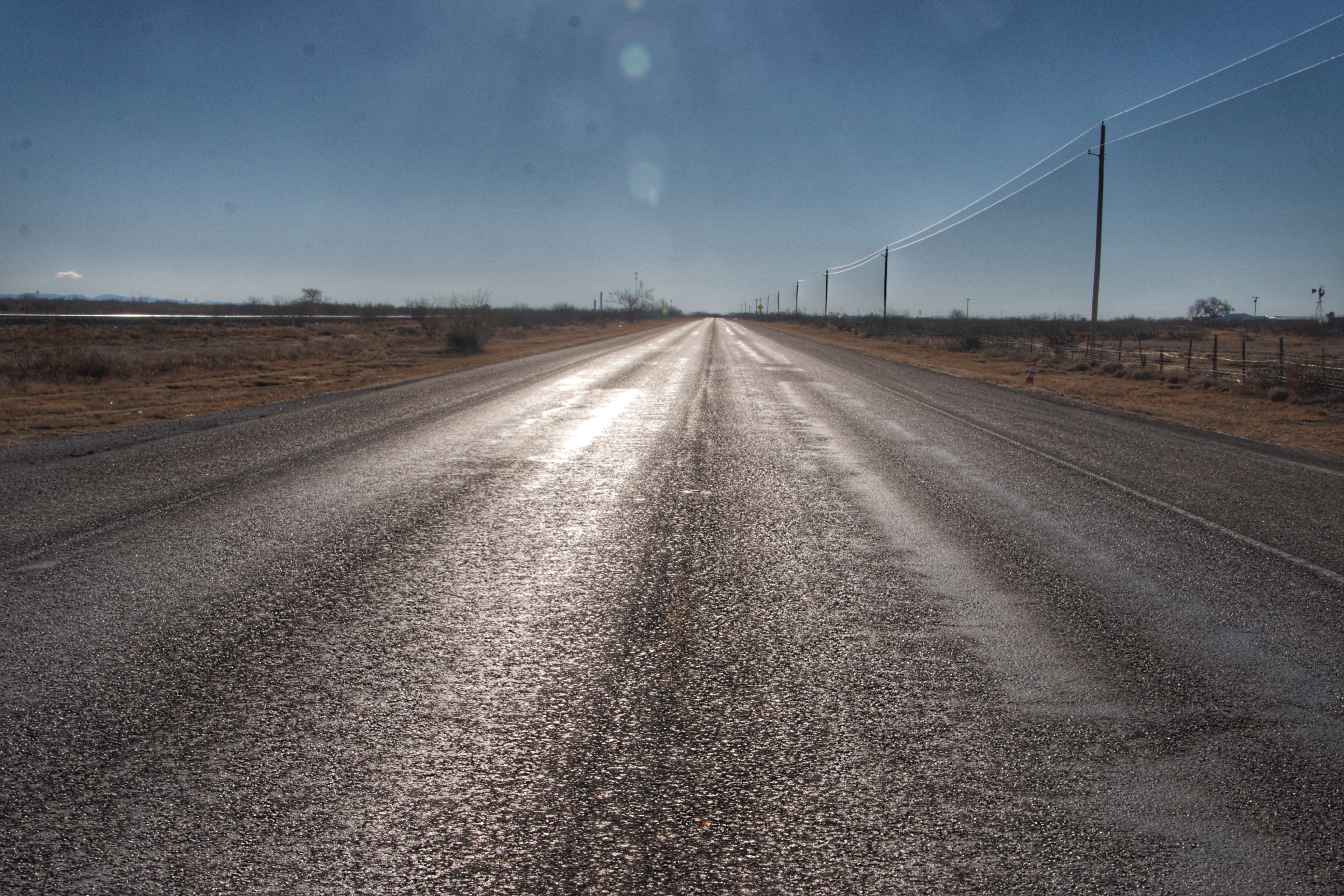
Now I’m returning to the Recall Chronicles to write a book four: FINAL RECALL. This story begins exactly where book three—FLIGHT OF THE OWL—left off, with Dextra and Jonathan and Gavin on a plane departing Costa Rica. But whereas Jonathan was the main character in FLIGHT, Gavin is the main character in this one. Major reorientation! They land in Santa Fe, New Mexico. So that’s where I’m going this week. And from there I will trace out the journey Gavin subsequently takes, going south from Santa Fe toward White Sands and then east into Texas. I can’t wait to take my imagination out on the open road!
For the first time, this moment of thrusting a new book out into the world doesn’t make me feel celebratory. It’s the final book in the EarthCycles trilogy, and I’ve come to love the characters deeply and to treasure the world that they’re building far beyond our own failure.
I don’t want to leave.
The series started with Song of All Songs, which introduced Meridia, a woman denigrated for being half Melfar in a world dominated by Mundani. The story follows her growth as she faces challenges that eventually enable her to find joy in her Melfar identity while also claiming the Mundani identity she inherited from her mother. It’s a heroine’s journey and it continues in the second volume, Book of All Time, in which Meridia (somewhat unwillingly) rises to a position of leadership and responsibility.
In the new book—Beyond the Endless—Meridia faces identity-shattering conflict arising from her very human desire to be a good mother as well as the leader that both Melfar and Mundani need her to be. And all this in a world that is suddenly much bigger and far more dangerous than Meridia had ever imagined. The resolution of Meridia’s journey at the end of this book still brings tears to my eyes—tears of hope for our own human future.
I launched the first two EarthCycles stories in the depths of the pandemic and did my best to make their publication eventful. But it was all on Zoom and I don’t want to issue another book that way. I’m also not sure I’m ready to invite people to an in-person event. Not yet.
So this time—for now—I’m just letting a book enter the world like a flower blooming, gently and naturally. I’m hopeful that those who appreciate flowers will notice.
Maybe we’ll have a party come summer.
You can purchase a copy of Beyond the Endless through BookShop.org and credit your purchase to your favorite indie bookseller. My favorites are Reverie Books and Malvern Books and Bookwoman. Stay tuned to learn which of these might soon have signed paperbacks on hand for you to buy in their store. And if you favor ebooks over printed ones, you can buy that on Amazon.
Once you have a copy of the book in hand (or downloaded to your reader), send me a photo of yourself with the book and I’ll send you a personalized bookmark, adorned with what may be a tiny waif of the Ancient Carnelian, containing its Song of the Wide Path, the symbol of friendship between Melfar and Mundani or perhaps between any humans who are labelled differently. Email me at: donnadechen@donnadechenbirdwell.com
Book Three of the EarthCycles trilogy is nearing publication, and it’s time to show you the awesome cover! I’m hoping to have the book available for purchase before the end of March. Meanwhile, here’s the cover blurb:
They thought Melfar and Mundani were the only people left on Earth.
They were wrong.
The hopeful joy wrought by the dedication of the Book of All Time, with its heady celebration of Meridia as both Melfar Calumet and Mundani Prophet is shattered when a ship with expansive white wings drops anchor off Selbourne. The ship and its occupants depart as swiftly as they came, taking with them a mirror and two Melfar—including one of Meridia’s infant twins. They leave behind only mystery: Who are these people? And where did they come from?
Meridia and her partner Damon must fight through their personal grief to recover their missing daughter and her caregiver Yuli. But how to begin? They have no ships. Perhaps an answer lies in the nearly forgotten Melfar Song of the Sea or in deciphering the original purpose of the stolen mirror, discovered long ago in the perilous ruins of Swarthpol, where Meridia’s father was once imprisoned.
Perhaps there are ways of reaching Yuli and the baby that do not require ships.
As I contemplate my imminent recovery from COVID and the onset of a new year, here is my one and only resolution: I resolve to have more good days in 2022.
A good day is one in which…
I spend time (in meditation or otherwise) being totally honest with myself.
I create something—with words or colors or materials or sounds—and set it loose in the world.
I notice life and my own aliveness.
I move with abandon.
I allow myself to acknowledge that I’m having a good day because (one or more of the above).
Happy new year to all! I wish you many good days ahead!






 Donna Dechen Birdwell