Where is my French?!

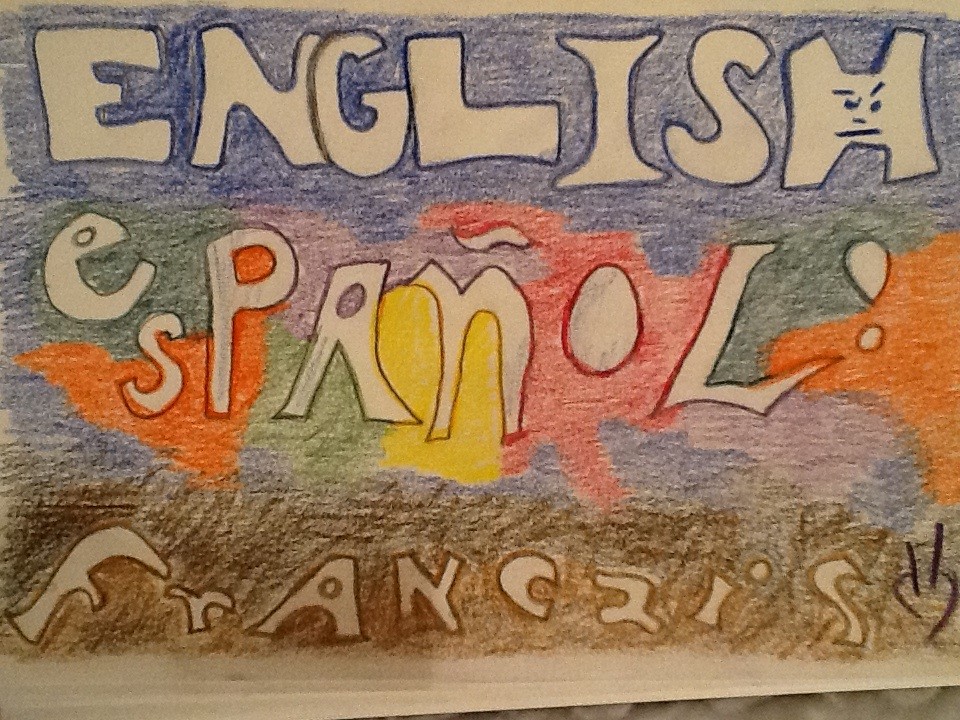
As soon as I crossed the frontier from Spain into France yesterday, I started trying to get my brain wrapped around all the signs and conversations in French.  I took 3 years of French at university, for heaven’s sake!  Where had all of that gone?

Buried.  Covered in the dust and debris of disuse.

I had been having so much fun in Spanish!  I could carry on casual conversations and eavesdrop in cafes.  I was even beginning to throw in the local expression “Vale!”  It translates roughly as “okay… yeah… sure… got it!”  I was looking for opportunities to use the question form (“Vale?”) or the doubled form (“Vale, vale!”).

And now I am in France struggling to excavate a language I once thought I would be pretty good at.  When I hear the words, I get it.  But when I try to speak…  I am just hoping this will get a little better during my few days here.
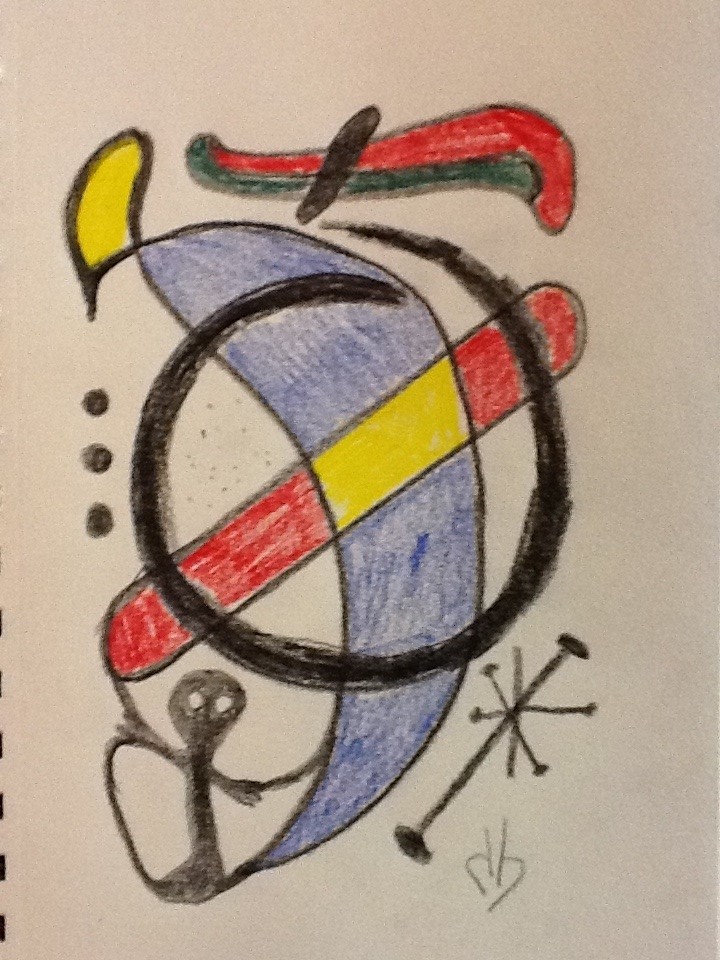
Miro

Today I saw Miro.  The Fundacio Joan Miro is a museum and art center built specifically to house the works of this prolific Catalan artist.  He lived from 1893 until1983.  One of the few pieces of art I had in my living space as an undergraduate was a framed Miro poster.  His art has resonated with me for a very long time.

in a video showing an aging Miro at work in his Mallorca studio, the artist talks about how the initial marks on his paper or canvas are unplanned, and that the painting then develops around this initial figure.  I was struck by the similarity to Japanese painting.  Zenga is “bold and immediate, and almost always created spontaneously, in a single breath.”  On the other hand, in nanga, each brushstroke suggests the next. “New visual tensions are created as the painting develops” (John Daido Loori, “The Zen of Creativity”).  Miro traveled to Japan and so this influence is not surprising – only delightful.

Like Picasso, Miro fearlessly experimented with many different artistic media and even spoke of his paintings as poems.  Maybe haiku…

Modernisme in Catalunya

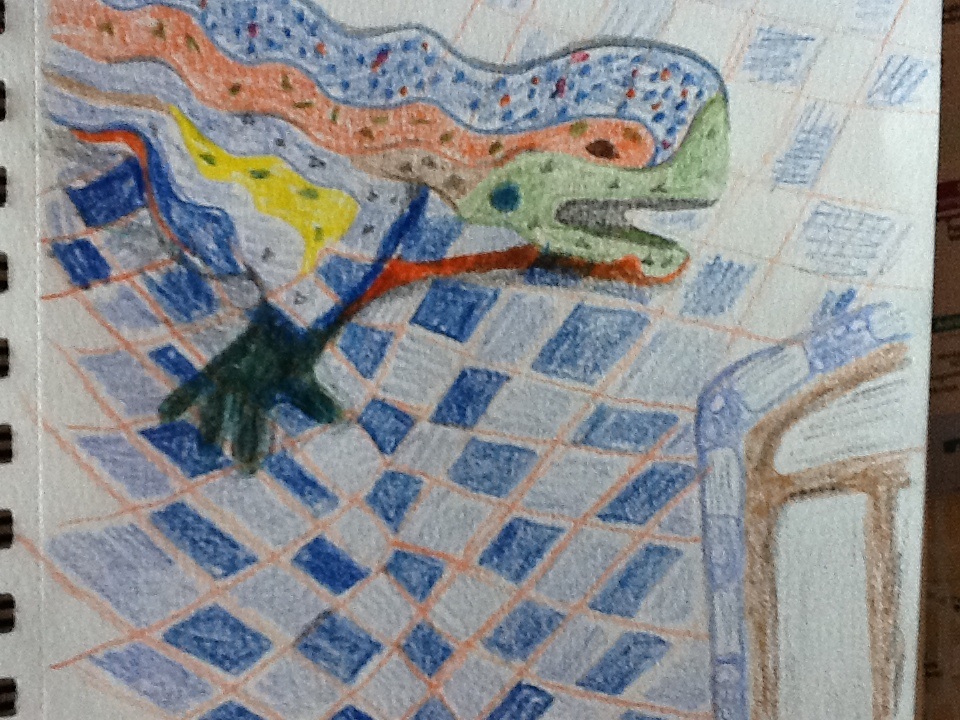
Contemplating Catalonian “Modernisme” and how it relates to what I think of as “modern art”, I think a sketch of Gaudi’s signature dragon is appropriate.

I think of Picasso when I think of modern art.  He has a strong connection with Barcelona, and I went to the Picasso museum here just a few days ago.  But does Picasso show up in the Museu del Modernisme de Catalunya?  Not even a mention.  Instead there are paintings and statues that look to me more Romantic or Art Nouveau as well as lots of furniture and decorative arts laden with flowers, marquetry portraiture, and stained glass.

Gaudi – a native son of Catalunya- was well represented.  Is he modern?  Well, he may have adhered to tradition in some ways – his catering to the bourgeoisie and his religious devotion, for example.  But I also find that his work resonates with the following statement which some take as an indicator of the postmodern in art.

“It would be better to think of art as a process that is started by the artist.  If successful, the work starts to live a life of its own, a work of art starts to work.” — Ibram Lassaw, 1952

La Sagrada Familia

The basilica of La Sagrada Familia – another Gaudi masterpiece – was my destination today.  I decided it was definitely in walking distance, although my body kept asking, “Are you sure…?”  Music was needed, so I pulled out my iPod and turned on “Winds of Devotion” by Carlos Nakai and Ngawang Khechog.  By the time La Sagrada Familia loomed into view, Ngawang Khechog was chanting the Prajnaparamita sutra (also know as Heart Sutra) – form is emptiness, emptiness is form… OM GATE GATE PARAGATE PARASAMGATE BODHI SOHA!   Wow.  The concrete and stone massiveness of La Sagrada towered above me as this sutra surged through my senses.

How could this equation of form and emptiness possibly apply to Gaudi?  As I opened my senses a bit more I thought, “You know… I think Gaudi almost got it!”  There is an expansiveness in his forms… There is a movement skyward (EVERYBODY in the basilica was looking UP)… And Gaudi’s emulation of nature imbues his work with an almost transparent quality, despite its massive substance.

Okay, there is also a lot of baroque decoration verging on an obsession for filling up every surface.  I did say he “almost” got it.

What Gaudi Saw…

Learning about Antoni Gaudi and immersing myself in his constructions, I have become fascinated by how his observations of natural forms in-formed his architecture.  The branching forms of columns, the shell-like undulations of facades… So today as I walked the grounds of Park Guell including the environs (and interior) of the house where Gaudi lived while designing some of his most remarkable buildings, I kept seeing natural things that resonated with Gaudi’s built forms. The pine trees that branch just so.  Vines that spiral around themselves.  Ripe beans that hang heavily from above.  The rough bark of the trees, the blue sky and bluer flowers… It is all there, and he was surrounded by it every day.

Some people may find some of Gaudi’s work a bit gaudy, but I am absolutely enchanted…

Yo! Picasso!

After Picasso…

Today was all about the Museu Picasso.  The current exhibit of self portraits ( Yo Picasso) ended with a set of haunting images of a very self aware old man that almost brought me to tears.  Somehow I did the whole exhibit in reverse, starting with these final paintings and gradually working back to the confident presentations of self by a gifted teenager.  I think I preferred seeing it this way.  Looking back rather than marching forward…

The other highlight was Picasso’s series of more than forty paintings based (loosely but meaningfully) on Diego Velazquez’ single painting called “Las Meninas.”  Picasso saw more in Velazquez’ work than he could express in a single painting, so he just kept painting what he saw/experienced in a series of variations.  I sketched one of the paintings in order to delve more deeply into it.  The photo above is of the drawing I made after returning to the room and my set of colored pencils.

I think what spoke to me most clearly from Picasso’s life work was the way he kept evolving as an artist, totally unafraid to try new things and to abandon (at least for a while) modes he had already mastered.


Impressions of Gaudi

Today I am drunk with Antoni Gaudi. It was not just the wet tiles on the roof of La Pedrera that I found “resbalozo”. His undulating, deeply interconnected forms overwhelmed me, and so I just sat down at times to take it all in. I took a zillion photographs, but all with my DSLR, so they will not be seen until I come home to my PC in October. The included drawing is my awkward attempt to communicate something about the feel of Gaudi.
In the informative exhibits housed in the multi-arched space called the attic, there was one table containing different video displays accenting Gaudi’s work with wrought iron and metal, with plaster and stone, with mural and painting, with wood and joinery, and with glass and light. I said to myself, “But why do we separate these out like this?” The genius of Gaudi is the way all of these materials flow harmoniously to form a whole. They are like the different instruments of a musical composition, playing a single note, or in harmony, each in its own voice. It is intoxicating.

WALKING SHOES – August 23, 2013

Walking in Nepal…

I have spent a great deal of time over the past week selecting shoes for my journey. I intend to do lots of walking and I do not wish my steps to be hindered by uncomfortable shoes. Walking is my preferred means of acquainting myself with a place (although an initial bus tour is often helpful for orienting oneself in a new city!).

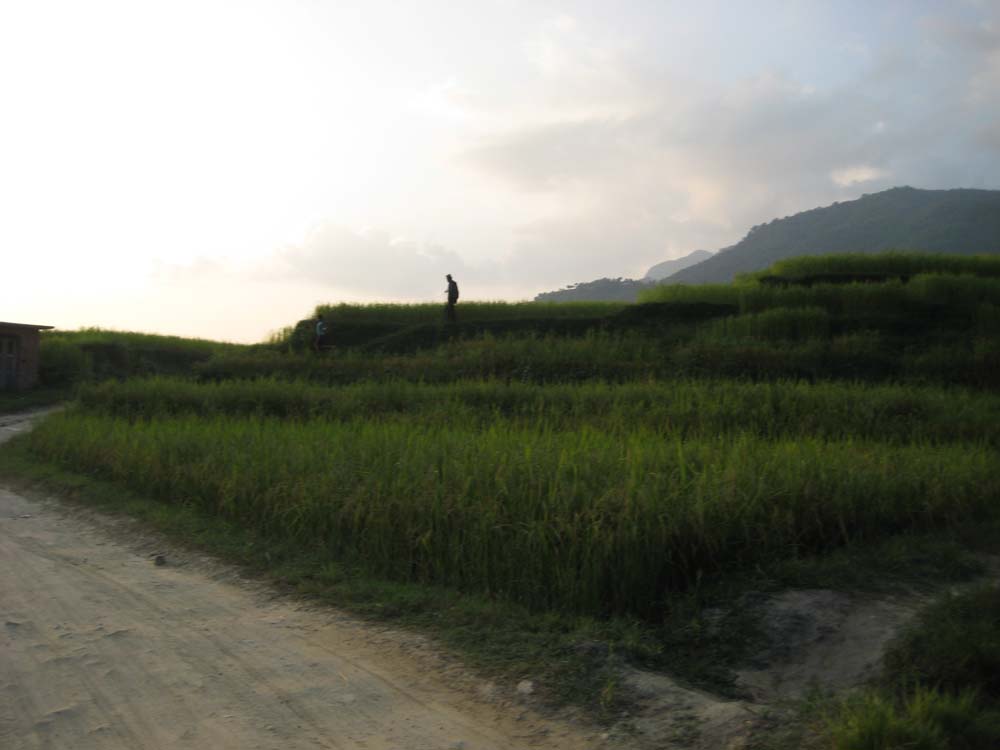
My best memories of places I have been almost invariably involve walks: Walking through the bush in Belize just at that magical time around sunset when the air itself becomes tinged a rose gold… Walking the paths through the rice fields in Nepal and literally stepping aside off the path to allow a rather large monkey to pass by… Wandering aimlessly through the alleyways of Boudhanath in Kathmandu… Walking up interminable mountains in Tibet to unspeakably sacred places… Walking slowly through the national cemetery in Prague and realizing that the honored heroes are almost all artists, writers, composers…

Humans are made for walking, and it is in walking that we experience life on a truly human scale. It is also how I come face to face with images for my camera! I shall no doubt enjoy my week of travel with a rented car through the Dordogne of France, but I suspect the walks will be the most memorable part of this journey.

Getting Ready for the Journey

August 15, 2013

The airplane’s aura…

The airplane’s aura…

In just a couple of weeks, I will begin a much anticipated journey.  My first destination will be Barcelona, Spain, with its wealth of art, architecture, and history.  After a week in Barcelona, I plan to rent a car and spend another week driving around northern Spain and southern France, particularly the Dordogne and some of the sites of mankind’s earliest artistic creations.  Then it will be back to Barcelona and a long flight to Kathmandu, Nepal, where I have spent so many treasured days in recent years.

When I was still teaching cultural anthropology, I found it curious that students always assumed that one of the greatest advantages of the invention of agriculture was that it permitted human beings to “settle down.”  And yet… how we love to travel!  Nothing stimulates the human mind more directly and completely than the experience of new places, new people, new experiences.  Nothing enlarges our sense of ourselves more than the adoption of multiple “homes” – multiple places where we know the ways of the “natives” and know our way around the country.  In this journey, I will encounter many new places and revisit some familiar ones.

It all begins very soon.

Best Chai Ever

August 18, 2013

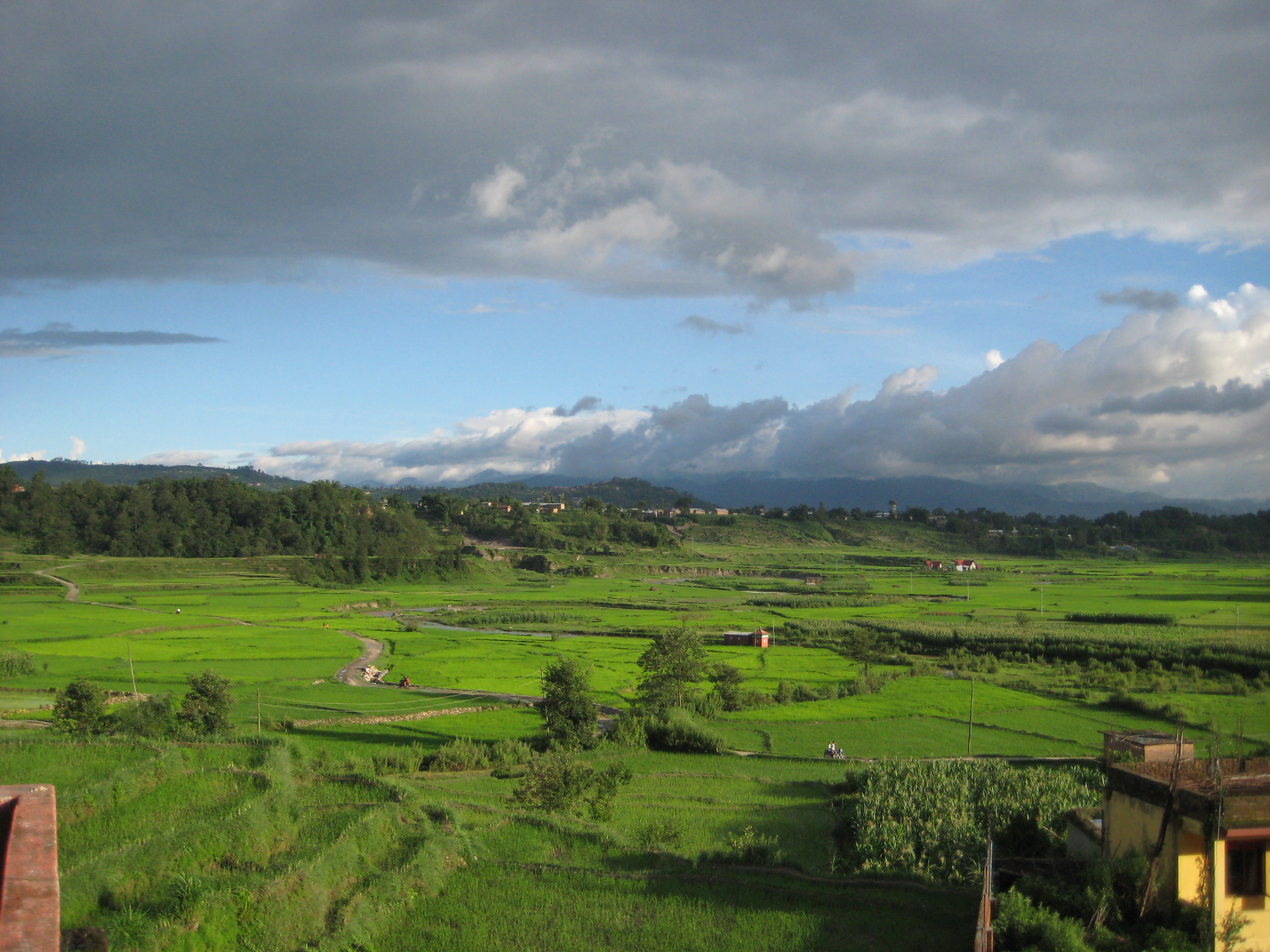
View from the gompa in Sundarijal, Nepal (2009)

When I posted this picture for Facebook today, I was reminded of the best cup of chai I ever had. It was in one of those villages at the horizon over there. A young boy met me at the entrance to the village in the company of several friends, all wanting to practice their grammar-school English. The simple greetings went well, but he met me again a little later, calling to me from the roof of his house.

“You come drink tea,” he said.
“No, no,” I replied. “I must walk back to the gompa at Sundarijal. It is getting late.”
“You drink tea!” he called, more firmly and with an engaging grin.
I laughed. “Thank you, but no.”
And then he got serious. “You sit!” he said. “I bring tea!”
So I sat. He brought tea. And it was the best cup of piping hot chai I have ever had.
But it’s getting late. I must go back to the gompa in Sundarijal.