What the Birds Say

fbIMG_0240

“A bird doesn’t sing because it has an answer, it sings because it has a song.” -Maya Angelou

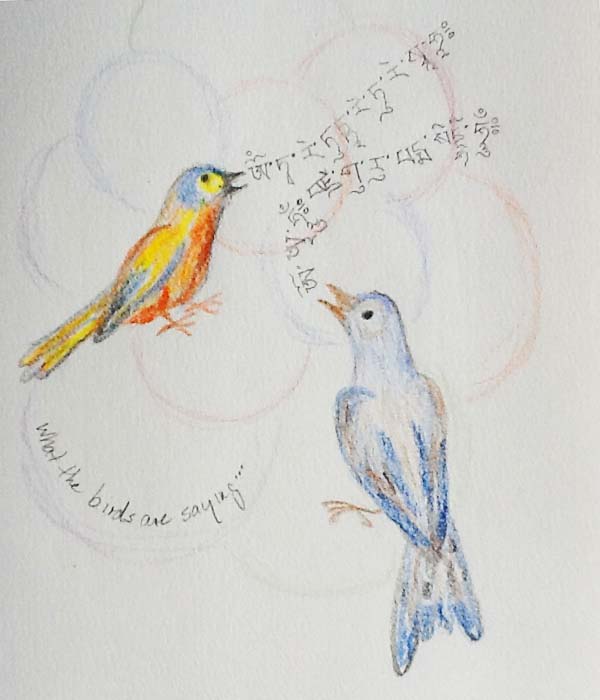
When I go for walks, my favorite soundtrack is the sound of birds, and I have been noticing how the soundtrack changes through the course of the year, through the hours of the day. In summer, I was always accompanied by the cooing of mourning doves and the calls of cardinals. More recently, the mockingbirds have been taking center stage. Evenings are always filled with the raucous cries of grackles. With all due respect to Dr. Angelou, not all birds sing – but they all have something to say and it is always worth hearing. The sketch above was done at the monastery I visit in Nepal, where I became convinced that the swallows outside my window, were reciting mantras about the vastness of the sky…

Waking Up

photo 1

Navigating that space between sleeping and being fully awake is often a very personal thing. I admire those who go immediately to the meditation cushion or head out to the running trail. I smiled this morning when my writer friend posted on her blog about the important role coffee plays in her own routine. I’m like that myself, even to the point of sometimes hurrying off to bed in anticipation of that wonderful cup of lavender-flavored coffee sweetened with honey that will greet me the next morning! Dr. Meg Fitzellen, the main character in my current novel-in-progress (THE FOURTH TIME), shares this predilection. In the passage below, she is waking up on her first morning back at her archaeology field site in Belize.

“Blending with the steady beat of rain on the tin roof, Meg could discern the rhythmic sounds of Indra going through her yoga practice just the other side of the paper thin wall that separated their rooms… Meg envied Indra the gentle discipline of yoga, but had never been able to commit to it herself, tending to get over enthusiastic and pull muscles anytime she tried it. Meg’s wakeup routine centered on coffee. That was what was on her mind as she rolled out of bed and pulled on her field pants and work shirt. She pushed her boots to one side, pulled the rubber flip-flops from under the bed and rolled up her pants legs in anticipation of wading to the kitchen where she hoped Elodia would have coffee ready.”

A Question of Balance


OLYMPUS DIGITAL CAMERA

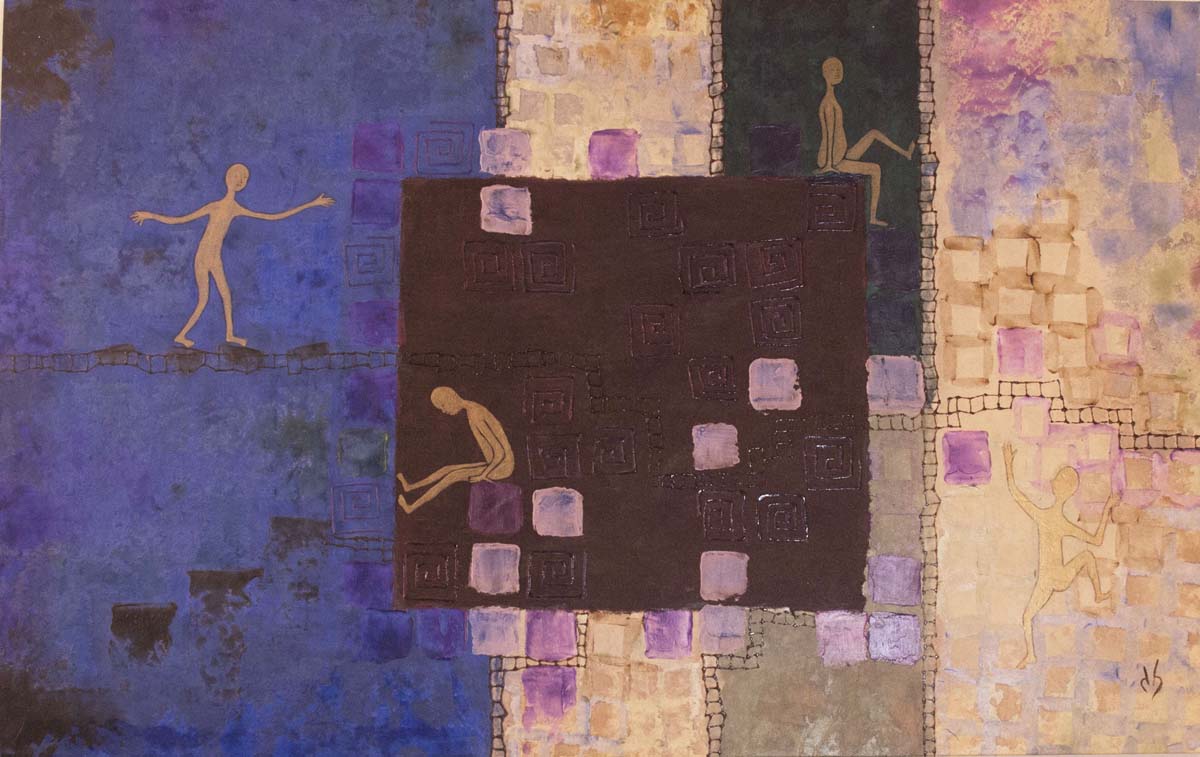
During the first weekend of EAST Austin Studio Tour, 2014 edition, I had some wonderful, insightful conversations with my guests about my paintings and about art in general. It was a very rewarding experience except for one minor detail: Nobody bought anything. I had good sales during the 2013 tour, so I guess I had expectations for 2014 as well.

A young high school student sat down with me late Sunday afternoon in the waning hours of the first weekend’s tour to interview me for a class assignment. “What is the point of making art?” he wanted to know. I rambled on about the importance of the viewer as well as the artist in completing a work of art. “The goal of art is to engage the viewer, to get them to stop for a moment and engage with something more than daily life.”

With that as a goal, my first weekend of EAST was clearly a success. Numerous visitors were engaged enough to hang around and talk about my pieces. Some took the time to read the accompanying poems posted with several of the paintings, poems from my fellow writers at Austin Zen Center’s Tuesday night writing group.

Maybe this weekend someone will feel engaged enough with one of my paintings to want to take it home with them. We are open at 702 Shady Lane from 11-6 both Saturday and Sunday.

(The painting above is entitled, “A Question of Balance.” It is available.)

Obliterated

LennonWALL

Artists sometimes do odd things.

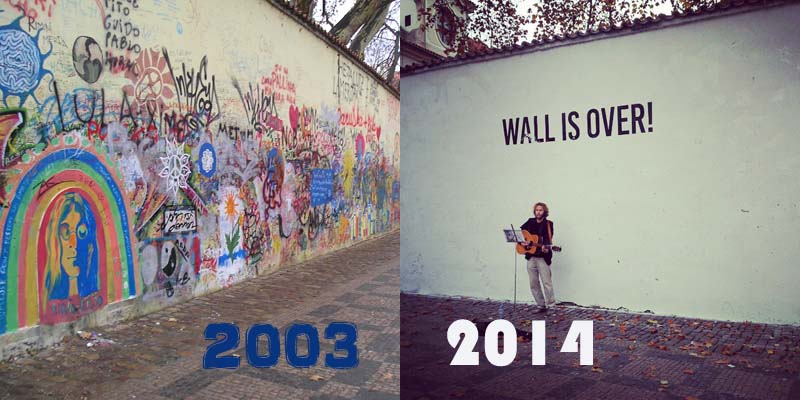
One of my favorite sites on my visit to Prague in winter of 2003 was the John Lennon Wall, where countless fans and tourists had posted layer after layer of tributes and expressions of devotion. It was beautiful and inspiring.

Today I read the news that a group of art students had taken it upon themselves to white out the entire wall! This was supposed to represent the beginning of a new era in honor of the anniversary of the “Velvet Revolution” and the inscription “Wall Is Over” was intended to be “an allusion to the subtitle of Lennon’s song ‘Happy Xmas (War Is Over)’.” However, the act of overpainting the wall inevitably evoked as well the Communist era in Czechoslovakia; during the 1980s, the Lennon wall was repeatedly painted over by Communist authorities in Prague.

The very notion of “starting over” is misguided. We always work with what already exists, for better or worse. All these art students have succeeded in doing is in imposing their own idea of a massive blank canvas over hundreds and thousands of other ideas and messages, layered into a public space that was allowed to belong to everyone. The students acted in an authoritarian way that I find flies in the face of the legacy of the Velvet Revolution they sought to honor.

(Read the article from HyperAllergic here.)

Images Have Power

YellowUmbrella

Art is not just stuff. Art is a physical manifestation of the heart, an expression of the human spirit, a bridge linking minds across languages, transcending ideas. Images have power. Art is subversive.

This little video emerged on my Facebook newsfeed this morning, only days after the announcement that a wealthy Chinese businessman had bought a painting by French Impressionist Edouard Manet for a record (for this artist) $65.1 million. China is producing some of the most voracious and deep-pocketed art collectors in the contemporary world, as well as some of the wealthiest artists. China has also produced Ai Weiwei.

I have no need to hang a Manet in my own home. I prefer Ai Weiwei and yellow origami umbrellas.

Different Kinds of Vultures

OLYMPUS DIGITAL CAMERA

Last night I was privileged to attend a screening of Russell O. Bush’s award-winning documentary, “Vultures of Tibet,” a beautiful little movie about sacred rituals and secular appetites. The film is about the Tibetan tradition of “sky burial,” in which the bodies left behind by deceased persons are taken to high holy places and offered to the vultures. Where we say “dust to dust”, I guess they might say “flesh to flesh.” The film was also about the intrusion of tourists – mostly Chinese, but westerners as well – into this sacred tradition and thus about people feeding their ignorance and macabre emotions with misunderstood images and actions. Bush was treading on dangerous and ambiguous ground, calling attention to these rituals in order to argue that the people who practice them ought to be left alone. He succeeded remarkably well, intimately filming hands instead of faces and even having expatriate Tibetans re-record the voices in order to fully protect the identities of the people who worked with him in Tibet. As an anthropologist, I congratulate him on his cultural sensitivity. As a Buddhist, I thank him for his sincere efforts to understand a tradition that westerners too often discount as merely bizarre. If this film comes your way, don’t miss it!

http://vulturesoftibet.com/russellobush

Day of the Dead

posterDIA

My novel, Way of the Serpent, includes a scene in which my youthful 111-year-old heroine spends the Day of the Dead in San Miguel de Allende, where she is enjoying her ninth ten-year sabbatical. It is the year 2125… I thought it would be fun to share this passage with you today! 

Jenda awoke the next morning with a sense of dread. Did she really want to get into all of this? Luis anticipated such a state of mind. He put his arm across Jenda’s body and pulled her closer. “Let’s not work today,” he said. “Let’s just close the gallery and go for a walk and let you recover some more. It’s a good day for a walk – it’s a holiday in some of the old neighborhoods and we can enjoy the fun.”

Jenda was relieved. “What holiday? What day is today anyway?” She had lost track.

“It’s the first of November – el Dia de los Muertos!” Luis announced.

“Well, that doesn’t sound like much fun. Dead people day?” Jenda pulled the covers back up around her chin and stared at Luis, who was laughing. She glared at him.

“Sorry, mi amor. I guess it’s not a very important holiday in your culture.” He shrugged. “Not even very important in mine anymore, but some of the people still enjoy it.” And he explained that it was a day when people honored their ancestors – the deceased ones. Of course, not so long ago, almost all of one’s ancestors were deceased.

“Not like today, when you can just go visit your grandparents at their apartment instead of at the cemetery. Even your great-great-grandparents if you happen to be Gen4! Much nicer today,” Jenda said. She was still scowling. “Nobody goes to cemeteries anymore.”

“Well, some of these people do,” Luis explained. “Most of them don’t, though. For most people it has just become a day to get together with family and friends and enjoy music and dancing and good food and sweet cakes shaped like little skulls.”

“Ewww!” Jenda hid her face in the pillow. “You’re just trying to make me sick again!”

“No, no! I promise you, querida! They are delicious cakes and the skulls don’t look realistic at all. They look more like… like little clown faces.”

“Luis!! You know I hate clowns!” Jenda moaned.

Luis was laughing again. He knew. “Oh, come on. Just get over yourself and come along and see if you can have some fun doing some of the crazy things your crazy boyfriend’s crazy people do!”

He got up and held out his hand. His smile was that warm, engaging, big-as-the-world smile that had attracted Jenda to him from the outset. Jenda playfully held back for a moment, then grasped his hand firmly, raised herself slowly from the bed and, in her best deadpan voice, said, “Okay then. Let’s go play with your crazy dead people!”
A Sequence of Days

webIMG_0872

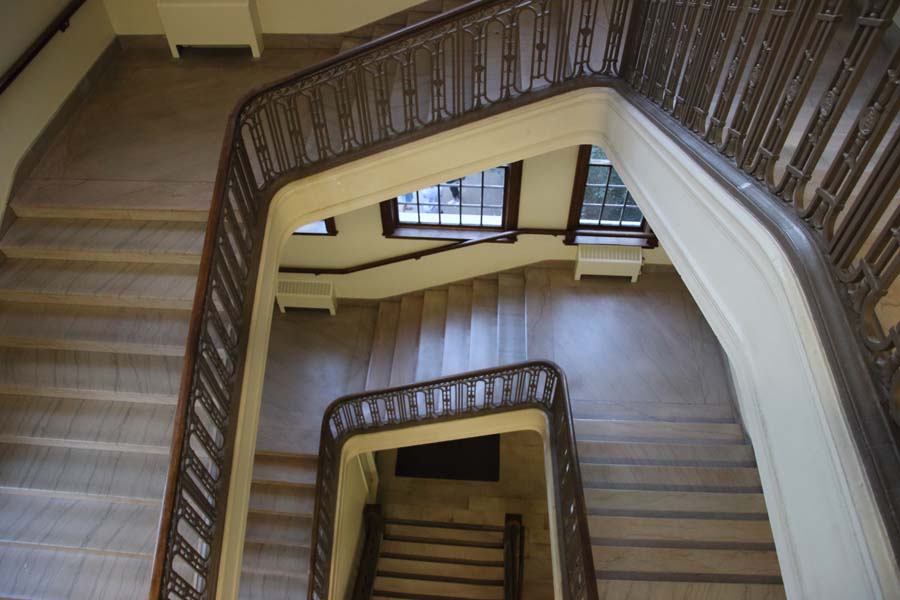
We are all time travelers. It’s just that most of the time, the limit of 24 hours per day, 365 (and ¼) days per year in strict linear succession is pretty rigorously enforced. Once in a while, though, we get to transcend those limits. I had such an opportunity this past week, reminiscing in the company of old friends. I had a visit on Monday from someone who was a very important part of my life back in the early 1970s. On Tuesday I traveled to Dallas and spent time with a few of my favorite people from my graduate school years in the last half of the 1970s. Then Thursday night I met up with some dear friends from my undergraduate years in the late 1960s. Time has treated all of us differently. Our experiences apart from each other occupy far more days and years than the ones during which we were interacting on a daily basis. And yet… the reasons why we became friends remain apparent. Sure, we evoke the past by sharing stories, but we also listen with interest to stories about things we were not a part of, and by sharing those stories we catch up the threads that continue to bring us together, year after year. See you again soon, guys!

(IMAGE: The timeless stairway of Dallas Hall at SMU.)

The Maze

feather1

Last week when we had the big rain I discovered a place where a footpath crossed Waller Creek about a half mile from my house. On that particular day, of course, the crossing was flooded, impassable.
Today on my morning walk I went back. The entire creek bed in that area had gone bone dry, so crossing on the footpath was no problem. I ended up on the University of Texas intramural fields. These fields happen to be home to Austin’s largest colony of Monk Parakeets (aka Quaker Parrots) and I was having a lovely time watching the birds flying back and forth between their massive communal nests in the stadium lights.
It wasn’t long before I realized that I was inside the outer perimeter of the fields, which seemed to be fully enclosed, except for exactly the place where I had entered. Determined not to go back, I kept pressing forward. It was like a giant maze! I seriously contemplated climbing the chain link fence. I could see the outside so clearly, but I kept running into locked gates or, worse, fences with no gates at all. Then I found a gate open that probably shouldn’t have been. This led to an actual walkway. And up ahead, I saw a student with a tennis racket entering what appeared to be a gatehouse. If that student came in, surely I would be able to get out. The fence on the front side of the gatehouse had a locked gate. So did the fence around back. The only way out was through the gatehouse. I walked in. “Hey,” I said to the student behind the desk as I nodded and smiled. Then I was out through the front door and free.
Did I mention that after years of searching I had finally found a parakeet feather?

The Interview

ducks1


One of the icons of American journalism, Ben Bradlee, passed away yesterday at the age of 93. Bradlee’s name will be forever associated with the Watergate scandal; as executive editor of the Washington Post at that time, he made key decisions that brought the scandal to light.
In early summer of 1970, with my fresh BA in political science from SMU in hand, I reported for my job interview at the Washington Post. My recollection is only that I was interviewed by “the editor” of the Post. Whether it was Bradlee or a more junior editor, I honestly don’t recall. But I do know this: It was the damnedest interview I ever had. We sat in the editor’s private office and we chatted. I recall no probing questions, just the kind of friendly queries someone who really wants to get to know you would ask. I was relaxed and actually kind of enjoyed the whole experience.
It was only after I left his office that it hit me that this man now knew more about me than my own mother did. Whoever that editor was, he was a grand master of the art of interviewing.
Did I get the job? Not exactly. I did get a call in which it was suggested that perhaps I was still too “green” for the Post. I was instructed to report instead to the Roanoke Times and World News in Roanoke Virginia, one of the papers owned by the Post. It was a great gig, and I often wonder what would have become of me if I had stayed on the journalism career track rather than taking that sharp turn into anthropology.

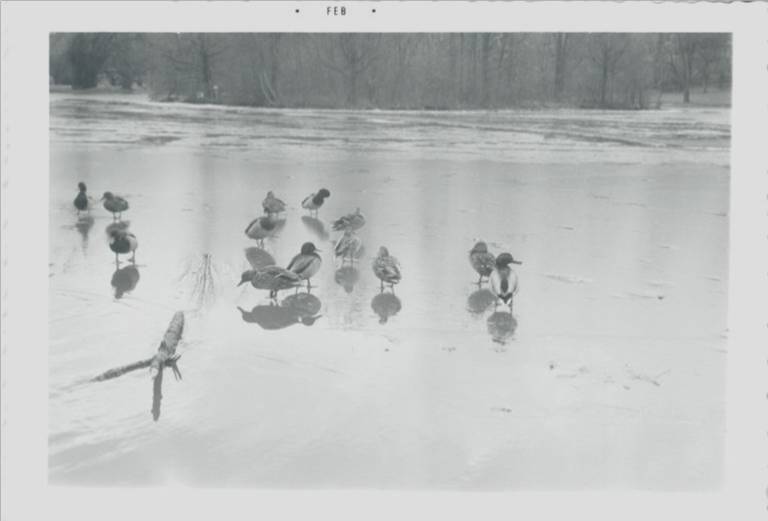
(NOTE: The photo above is one I took in rural Virginia while working for the Roanoke Times.)