Future, Past Tense

One of my current writing projects—the one that is pulling at my sleeve most insistently at the moment—is not science fiction. It’s historical fiction. Is that a weird change of direction for me? Somehow, it doesn’t feel like it. 

This morning I searched out the following words from my writing hero, Ursula Le Guin. Her perspective gives me welcome insight into my writing transition. Le Guin begins her brief essay by acknowledging our conventional assumption that the future (the usual subject of science fiction) is what lies in front of us, while the past (the subject of historical fiction) lies behind us. 

“It seems that the Quechua-speaking peoples of the Andes see all this rather differently. They figure that because the past is what you know, you can see it—it’s in front of you, under your nose. This is a mode of perception rather than action, of awareness rather than progress. Since they’re quite as logical as we are, they say that the future lies behind—behind your back, over your shoulder. The future is what you can’t see, unless you turn around and kind of snatch a glimpse. And then sometimes you wish you hadn’t, because you’ve glimpsed what’s sneaking up on you from behind….” (“Science Fiction and the Future” in Dancing at the Edge of the World, 1989) 

As I continue reading and researching the history of the American South (especially Mississippi) and the history of Scotland, both entangled in my own family history, I begin to see our future more clearly. I hope my story can bring the same kind of clarity to my readers. 

Le Guin, Ursula K.. Dancing at the Edge of the World: Thoughts on Words, Women, Places (p. 215). Grove Atlantic. Kindle Edition.
Time & Magic

“Time exists so that everything doesn’t happen at once and space exists so that everything doesn’t happen in the same place.” — Albert Einstein (allegedly…)


This quote showed up in my Facebook “memories” today. It was fortuitous, since I had already typed in the title of this post…


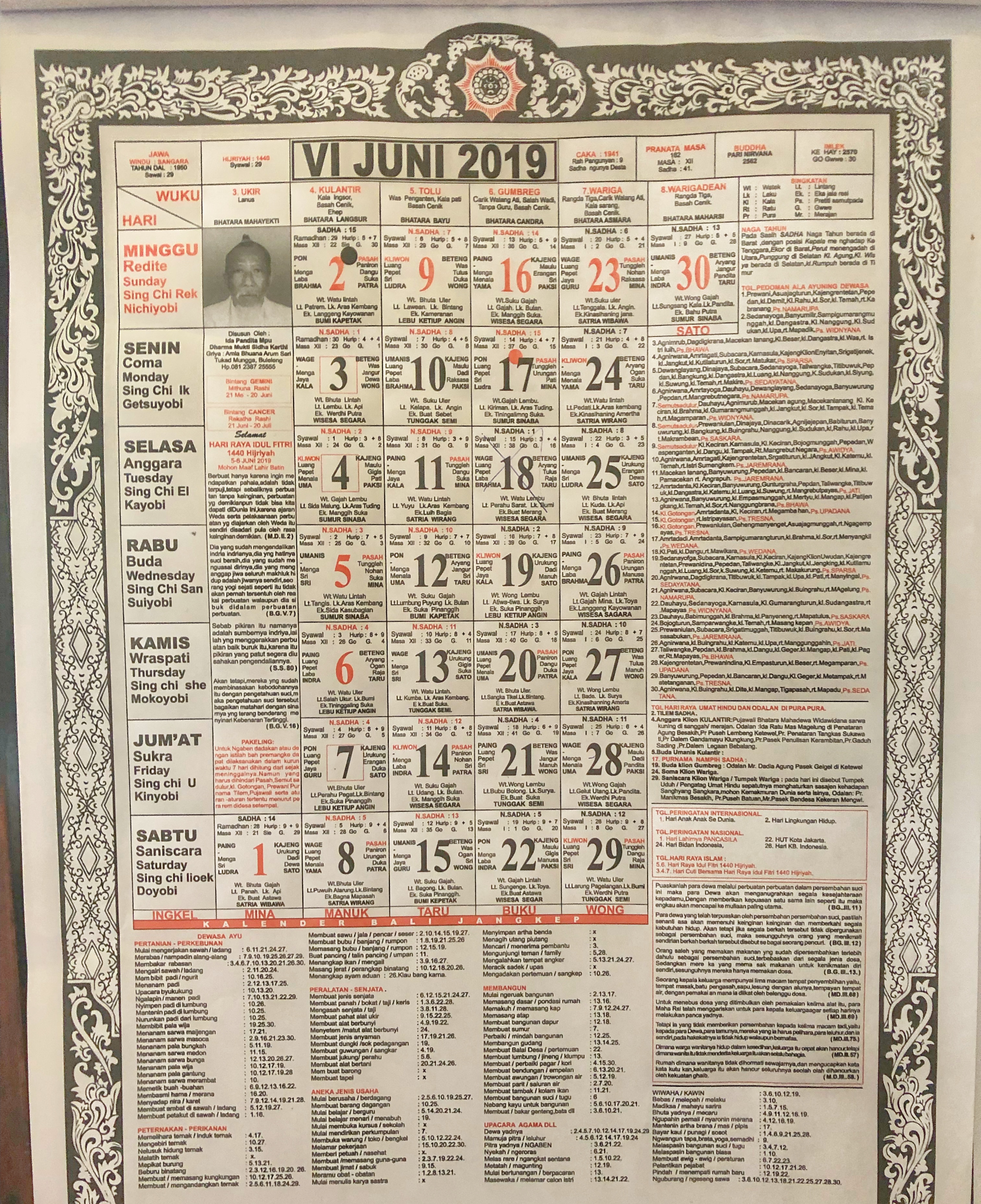
Bali (the space I currently occupy) invites reflections on time. In Bali, you see, there are three calendars running simultaneously – our standard Gregorian calendar is one; the 210-day calendar called Pawukon is another; and the third is the Saka lunar calendar.

The Pawukon is not so much a “year” as a cycle, “since no record is kept of successive ‘years,’ nor are they numbered or named. They just pass by.” The Pawukon is organized into ten different systems of weeks, from a one-day week to a ten-day week. Most important are the three-day, five-day, and seven-day weeks. All these different “weekdays” have names and the conjunctions of these myriad cycles is important in differentiating auspicious days from inauspicious ones for all kinds of activities.

In my new book (coming July 20), “time” is an important subtext to the story. Meg is an archaeologist, obsessed with the past. Her husband Seth is a science fiction author, writing about time travel and the future. So, yes, the subject of time comes up in their world. Here’s a brief example, in which they’re discussing an impasse in Seth’s WIP. Meg speaks:

“Are you sure they’re not inter­fering with the timeline?” (Would I mind so much if they were?)

“Well, there’s another aspect of the story I’m still work­ing on.” Seth scratched the back of his neck and frowned. “Maybe time isn’t a line…” 

You may now pre-order the Kindle version of NOT KNOWING and it will be sent to you on July 20!

(Quotes about Balinese time are from Fred Eiseman, Jr., BALI: SEKALA & NISKALA.)