https://donnabirdwell.substack.com/p/on-the-origins-of-a-book

One of my current writing projects—the one that is pulling at my sleeve most insistently at the moment—is not science fiction. It’s historical fiction. Is that a weird change of direction for me? Somehow, it doesn’t feel like it.
This morning I searched out the following words from my writing hero, Ursula Le Guin. Her perspective gives me welcome insight into my writing transition. Le Guin begins her brief essay by acknowledging our conventional assumption that the future (the usual subject of science fiction) is what lies in front of us, while the past (the subject of historical fiction) lies behind us.
“It seems that the Quechua-speaking peoples of the Andes see all this rather differently. They figure that because the past is what you know, you can see it—it’s in front of you, under your nose. This is a mode of perception rather than action, of awareness rather than progress. Since they’re quite as logical as we are, they say that the future lies behind—behind your back, over your shoulder. The future is what you can’t see, unless you turn around and kind of snatch a glimpse. And then sometimes you wish you hadn’t, because you’ve glimpsed what’s sneaking up on you from behind….” (“Science Fiction and the Future” in Dancing at the Edge of the World, 1989)
As I continue reading and researching the history of the American South (especially Mississippi) and the history of Scotland, both entangled in my own family history, I begin to see our future more clearly. I hope my story can bring the same kind of clarity to my readers.
Le Guin, Ursula K.. Dancing at the Edge of the World: Thoughts on Words, Women, Places (p. 215). Grove Atlantic. Kindle Edition.
I sit eating my simple breakfast and watch a bird out the window as it hops and flutters from branch to twig and back again. An ordinary little thing, busily following the urges of its feathered kind to eat, stay safe, reproduce.
We humans have the same urges, except in more complicated form. We’ve turned dining into an art form, an industry, an elaborate set of social rituals. We seek safety not merely from the elements or true predators, but also from concocted and cultivated enemies. Reproduction? Necessary as always for the continuance of the population, but when is the last time we’ve really cared about that? No, we follow the urges—sexual and intimate—for their own sake. When we find an intimate partner whose company we would like to have as a fixture in our lives for the foreseeable future, we may embark on the project of bringing another generation into our circle. Whether we do that via our own sexual act or by adoption or surrogacy seems to matter little these days. However we do it, it results in continuity. The population continues. The species continues.
Some of us participate in continuity in other ways, choosing or accepting not bringing another generation into our intimate circle, while being useful in other ways to our society and culture, ensuring continuation that nurtures the next generation.
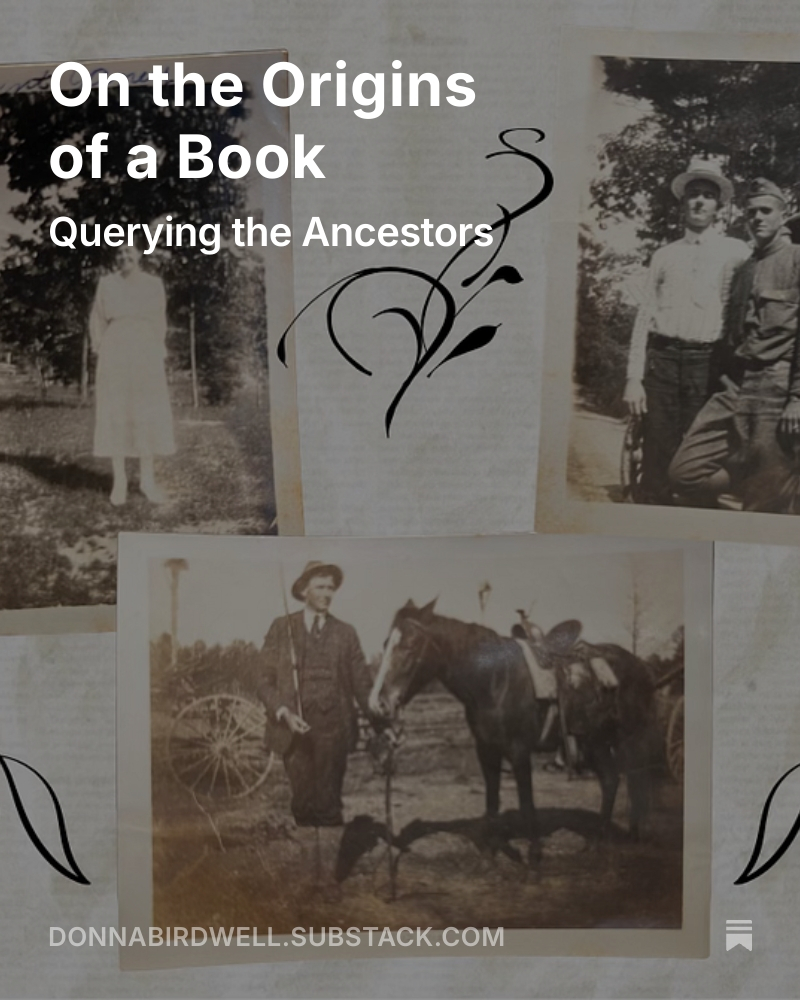
On this road trip, I’ve been driven by the desire to learn more about a particular relative of mine, a great-uncle who never had children, the kind of individual who is almost inevitably neglected by those of us who engage in ancestry projects of various kinds. I’m writing a story, but it won’t be a story about him. It will be a story inspired by what he’s teaching me. I’m almost ready to start writing it.
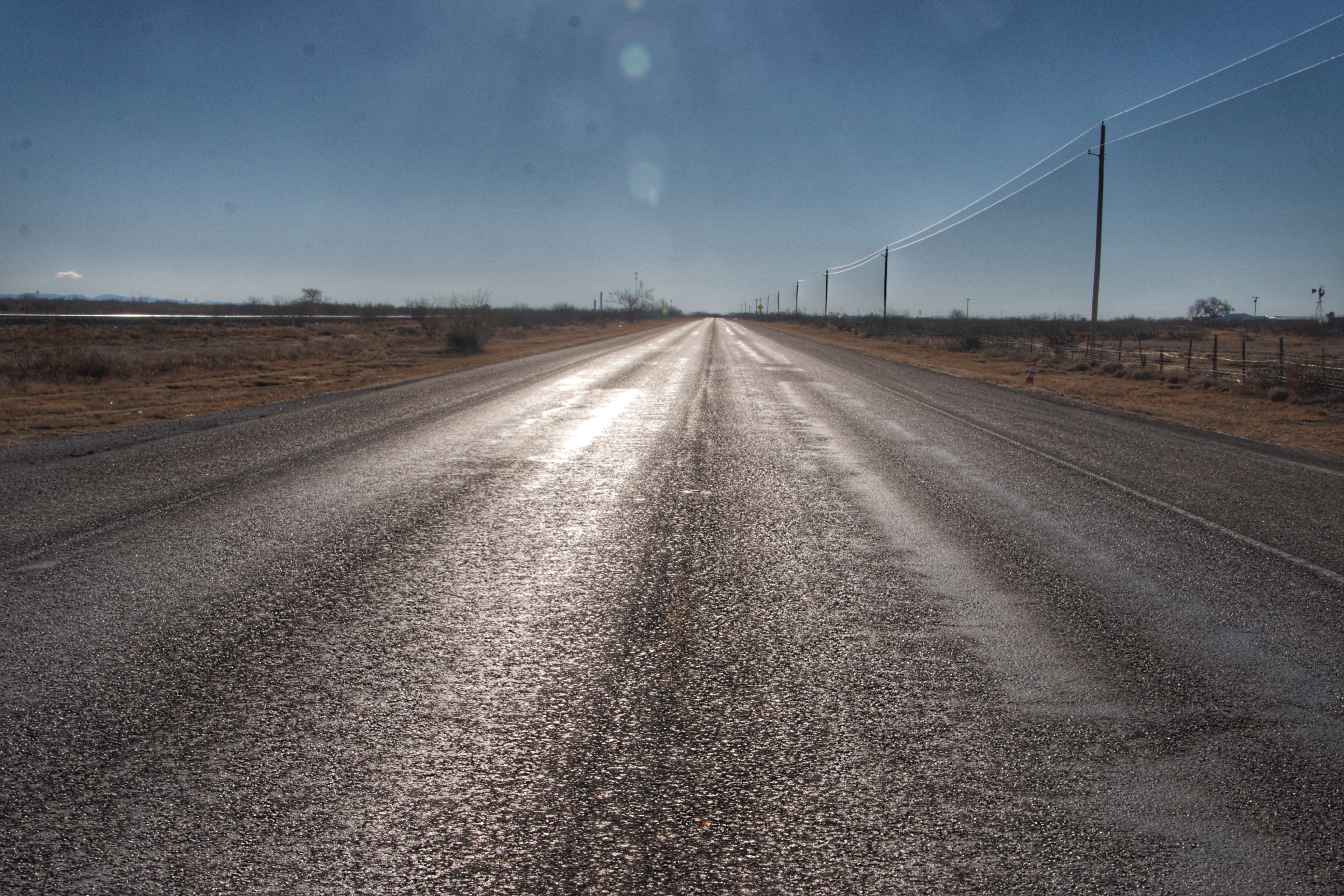
My last real “writer journey” was in March of 2016, when I traveled through New Mexico, Arizona, and west Texas collecting interviews and images and impressions for FLIGHT OF THE OWL, book 3 of my Recall Chronicles series. I took a wonderful journey to Ubud, Bali, in June 2019 as I prepared to release my one stand-alone contemporary fiction book—NOT KNOWING. A draft of the first book of my EarthCycles series (SONG OF ALL SONGS) was already in the hands of beta readers at that time, so my trip to Bali was not about researching or writing anything in particular, but rather about settling into a better understanding of who I am as a writer.
Writing got placed on the back burner at the beginning of 2020 as I temporarily took on a more active role as caregiver for my young granddaughter.
And then COVID happened. I found that I had lots of time for writing and kept moving ahead slowly despite the daily distractions of politics and pandemic. In the last three years I’ve published three more books: SONG OF ALL SONGS in 2020, BOOK OF ALL TIME in 2021, and BEYOND THE ENDLESS this year.
Now I’m returning to the Recall Chronicles to write a book four: FINAL RECALL. This story begins exactly where book three—FLIGHT OF THE OWL—left off, with Dextra and Jonathan and Gavin on a plane departing Costa Rica. But whereas Jonathan was the main character in FLIGHT, Gavin is the main character in this one. Major reorientation! They land in Santa Fe, New Mexico. So that’s where I’m going this week. And from there I will trace out the journey Gavin subsequently takes, going south from Santa Fe toward White Sands and then east into Texas. I can’t wait to take my imagination out on the open road!

One of the joys of being a self-published author is that you can price your books however you like and if the notion strikes you to offer your readers a bit of a gift, you can do it without consulting anyone.
So here you go, dear readers: For a limited time, the ebook of Book of All Time (EarthCycles Book Two) is only $2.99. A whole adventure for less than the price of a latte! And you know Book Three is coming soon..!
Book two of the award-winning EarthCycles series–Book of All Time–is now available for you to read and enjoy! You can purchase the paperback at Malvern Books (Austin) or Third Place Books (Seward Park, Seattle). Or ask your own local bookstore to order it! Also available (always) on Amazon.
I’ll be sharing passages and backstory with readers on Friday, August 13, via Zoom. Join us for what promises to be a fun event!
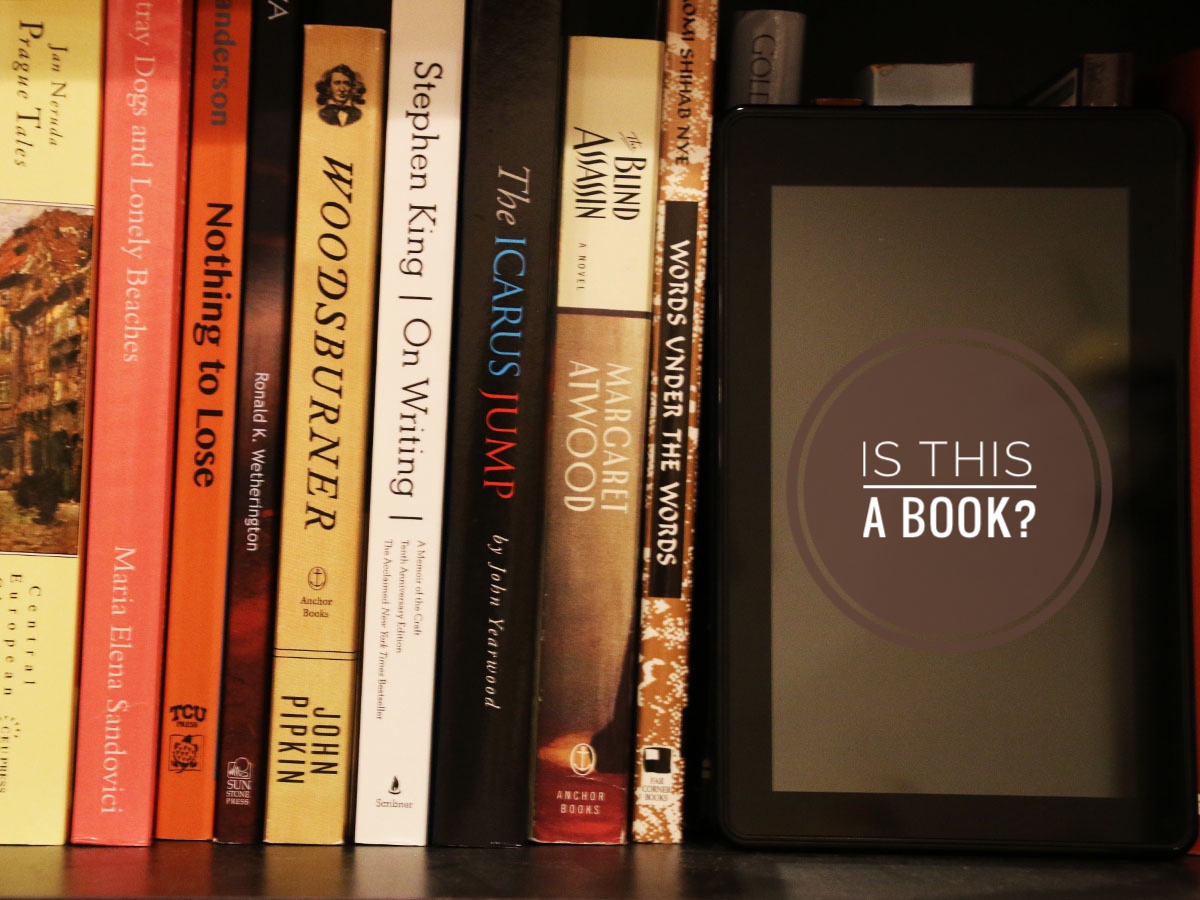
A persistent trope among readers and writers on social media is the debate between those who prefer digital reading devices and those who prefer “real” books. In the last few years, devotees of audio books have also waded into the fray. It amuses me how partisans of each type seem convinced that their preferred format really is the best as they seek to convert or disparage the rest.
The question came up in my novel, Shadow of the Hare. The main character, Malia, is a dissident in the Recall movement and adamant in her devotion to the physically printed word. Her preference emerged in childhood:
“I spent hours not only reading but arranging and rearranging my books on the shelves in my bedroom, finding sensual pleasure in the feel and smell and weight of them, the hard squaredness of their corners, the colors and images on their covers, the textures of their papers. The occasional, inevitable paper cut was a blood bond.”
She and other partisans of Recall became fearful of how digital media could be too easily revised and manipulated to suit the politics of the moment. In her world, printed books had become a resource hoarded by dissidents.
They may be onto something there.
Nevertheless, I understand that digital books are much more convenient for travelers and may also have some appeal to those advocating for the trees. You don’t have to cut down any trees to produce and access books on Kindle or Apple. People of a certain age also point out the convenience of being able to create their own LARGE PRINT VERSION of whatever book they like.
My latest book, Song of All Songs, features a main character who can’t read. She belongs to a future version of humanity, people who process the world in such a way that strings of figures printed on pages resist translation into anything meaningful. (They have other remarkable capabilities that far outweigh this seeming disability.) There are people in our own time and place who share this characteristic to some extent, of course. Books read aloud definitely appeal to such individuals. Audio books also appeal to people who want to read on the fly, on the run, on the commute, or while they’re doing other things like cooking dinner or cleaning the house.
All three formats have their place. The question of what constitutes a “real” book disappears when we focus on the stories themselves. Real stories can be written down and printed on paper. They can be composed digitally and accessed through cyberspace. They can be told aloud and listened to. Stories can also be acted out in plays and movies. The stories are what matter. However you choose to produce them and consume them is up to you. Just keep enjoying the stories!

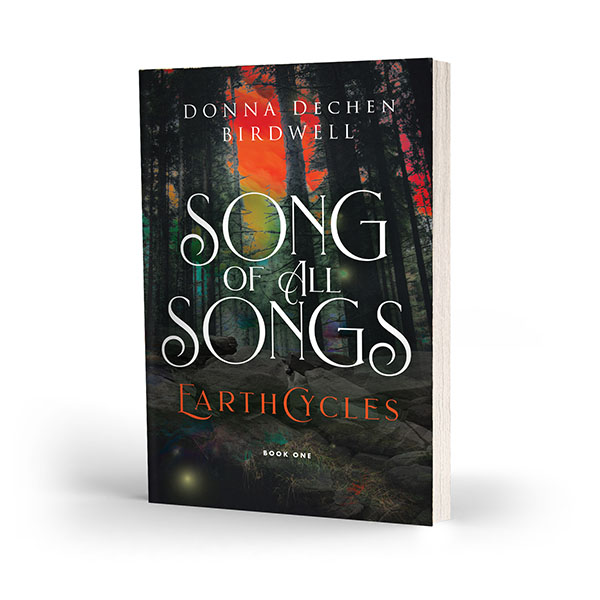
NOTE: Song of All Songs is currently available as either a paperback or digital book. The process of producing the audio version begins next week!

Long after the apocalypse, Earth has repeopled itself. Twice.
Despised by her mother’s people and demeaned by her absent father’s legacy, Meridia has one friend—Damon, an eccentric photologist. When Damon shows Meridia a stone he discovered in an old photo bag purchased from a vagrant peddler, she is transfixed. There’s a woman, she says, a dancing woman. And a song. Can a rock hold a song? Can a song contain worlds? Oblivious of mounting political turmoil, the two set out to find the old peddler, to find out what he knows about the stone, the woman, and the song. But marauding zealots attack and take Damon captive, leaving Meridia alone. Desolate. Terrified. Yet determined to carry on, to pursue the stone’s extraordinary song, even as it lures her into a journey that will transform her world.
Today I was looking at this newest piece of fiction I’ve written and I asked myself, “Where did that even come from? How did I get to a place where I would think such a story into existence?” And then I remembered this poem that I wrote back in 2003.
When I look back
And try to see how I’ve come
To where I am today
I recognize a few landmarks
But there is
No path.
I have slipped through the forest
Sans machete
With only
Glimpses of the mountaintop
The slant of the sun
The moon between the branches
For guidance.
I have crossed a few paths
Maybe walked at the edges
Of some fairly well-trodden roads
From time to time.
But it is impossible to tell
Where I’ve come from or
How I’ve gotten here from
Wherever I began.
There is
No path. (4/18/03)
Get your signed copy of Song of All Songs from Malvern Books and join my book launch on Friday, August 28!
Also available on Kindle!
I struggle most days, in the midst of this pandemic, to edit my next book, to prepare it for publication, to write the next story after this one. I rarely turn out more than a few hundred words a day and sometimes none at all. I have to ask myself: Why am I doing this? Why does it matter that I write? Why does it matter that I write this particular story?
For one thing…if I should die of this damn coronavirus thing, I don’t want to leave behind an unfinished manuscript.
But that’s not enough. Why is this story something I want to finish?
What is it about?
It’s about humanity. About all the things that may or may not be “human nature.” About our diversity and how diversity is the bedrock of survival.
It’s about a woman who thinks, because she is biracial, that she is nothing. And then discovers that she is everything.
It’s about people who hate and distrust and misunderstand one another and then end up needing one another to survive.
It’s about us.
I’m ready to launch Song of All Songs on August 28. I’m ready to tell you a story I believe in.
 Donna Dechen Birdwell