Narcissa June Tarver is a figment of my imagination, conjured as the vehicle for a story I needed to tell about some of my ancestors and collateral relatives who lived in southern Mississippi in the years after the Civil War. I crafted her carefully. I made her by far the youngest in her family in order to make her an uneasy bridge between generations. I gave her a minor disability in order to make her of questionable marriageability. But even as she performed her assigned function, she began to take over, to assert herself as someone who had her own story to tell.
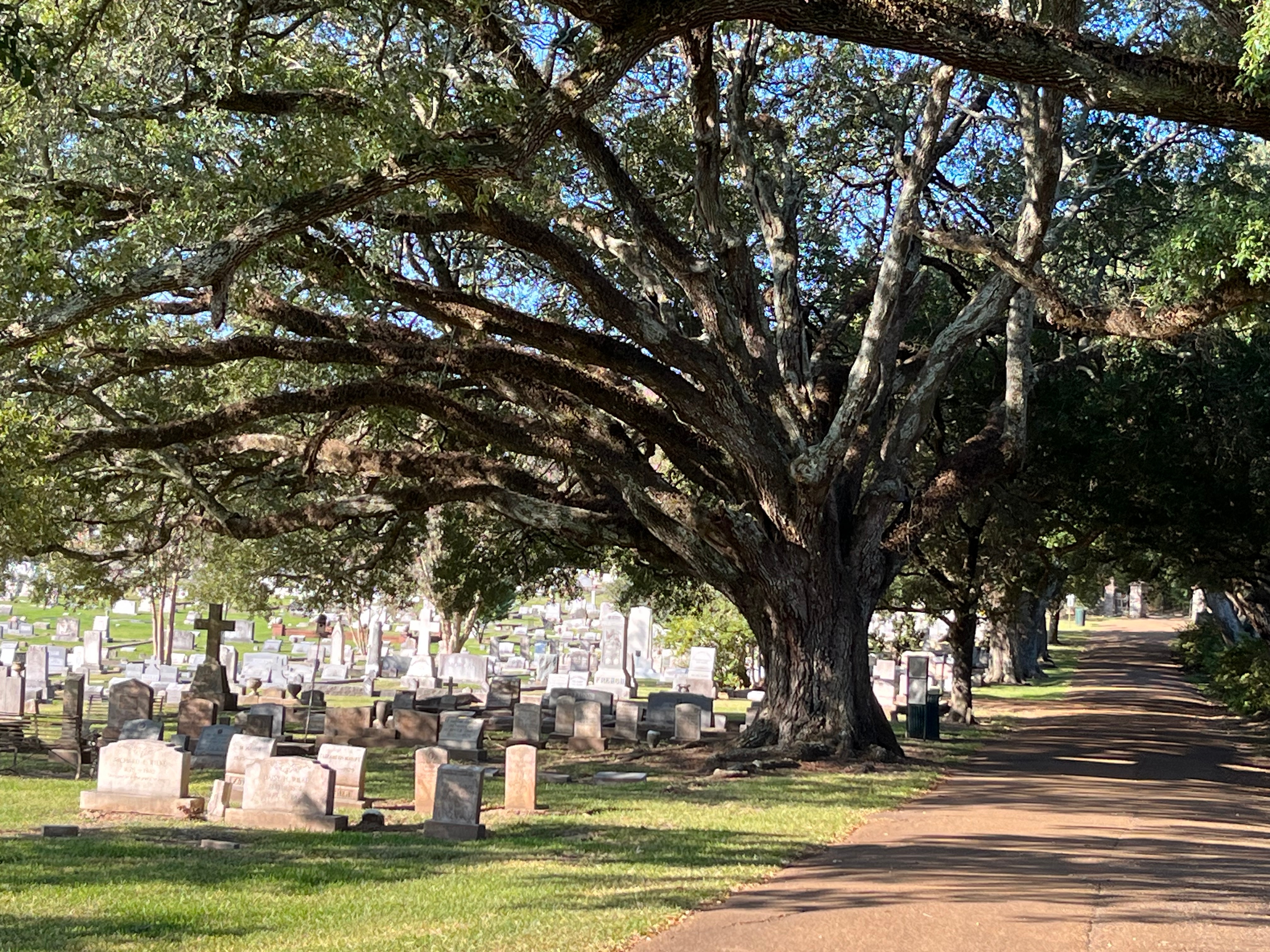
At this point, I was still calling her “Lucy,” but that increasingly didn’t seem to fit. Besides, there were too many other characters in Southern fiction called Lucy. One evening on my second trip to Natchez, as I was perusing names in my family trees and census records, I paused over the name “Narcissus,” which had been the middle name of one of my great-grandmothers. I liked it, but I wasn’t sure. The next morning, before leaving Natchez for Jackson, I looked through a book in my AirB&B about the Natchez cemetery. I noticed an odd looking grave of a fellow named Rufus Case (possibly a relation) who had reputedly been buried in his rocking chair. I resolved to search out the grave before leaving town. I found it. And on another side of the weirdly cubic marker was the name of another person buried there: Laura Narcissa Case. That clinched it. I couldn’t help but wonder if my main character hadn’t just told me who she wanted to be.
And so the story of The Disenchantment of Narcissa Tarver evolved—as works of fiction often do—as a collaboration between author and characters. Narcissa refused to be submerged in the tumult of her brother’s political career, consistently finding ways to play her own role in his very real world. I had to let her have her way. And now that her story is written and soon to be published, I think she may want more. A sequel? A story about the rest of Narcissa Tarver’s life after her “disenchantment”? That could happen.
 Donna Dechen Birdwell